The Battle for English Whisky
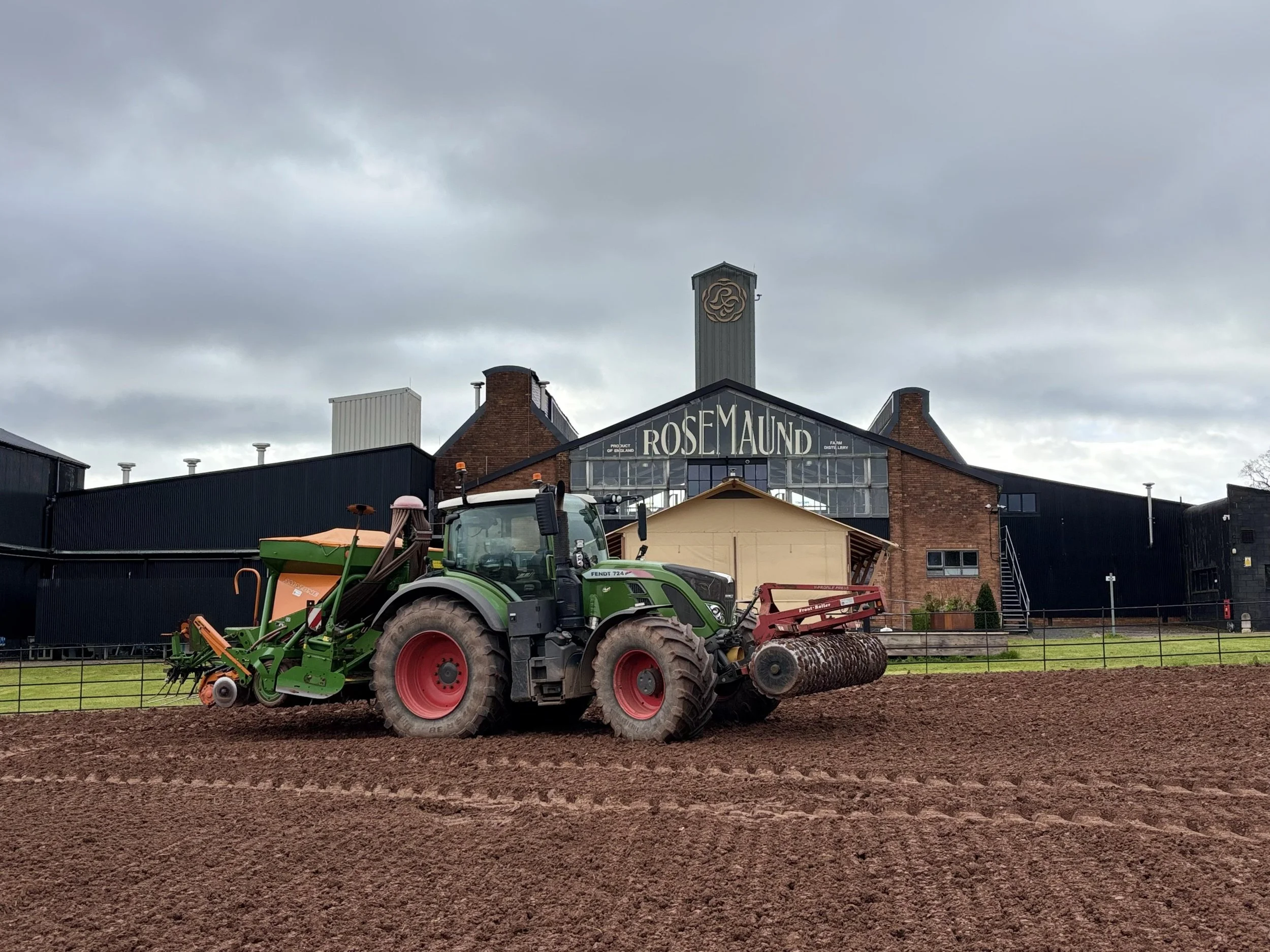
Barley visits Rosemaund during their first Spring barley planting. Photography: Rosemaund
English whisky has gone from non-existent to world-beating in less than 20 years. Now, with awards piling up, dozens of new distilleries opening and a legal battle brewing over what can be called “English single malt”, Scotland is starting to push back, writes Tom Pattinson
“They are behaving like the school-ground bully.” It’s a bright early spring day in Norfolk in the east of England, and Andrew Nelstrop is incredulous as he walks me around what was the first English distillery to reopen and produce spirit in modern times.
“The SWA are behaving like the school-ground bully,” he tells me over a morning coffee. “We are saying this is our national drink and we want to recognise it under our own rules.”
For four years, English whisky makers have been lobbying the government to create a Geographical Indication for English Single Malt Whisky, a legal definition that would protect the category in the same way that Scotch, Champagne or Parma ham are protected.
Now, with a decision expected within weeks, the battle is turning ugly. The Scotch Whisky Association says the proposed rules threaten the integrity of single malt whisky. English distillers say Scotland is trying to pull the ladder up behind it just as England’s whisky scene is finally coming of age. Although it may sound like a niche trade dispute, it is a fight over who gets to define quality and authenticity in British whisky.
The fight over ‘single malt’
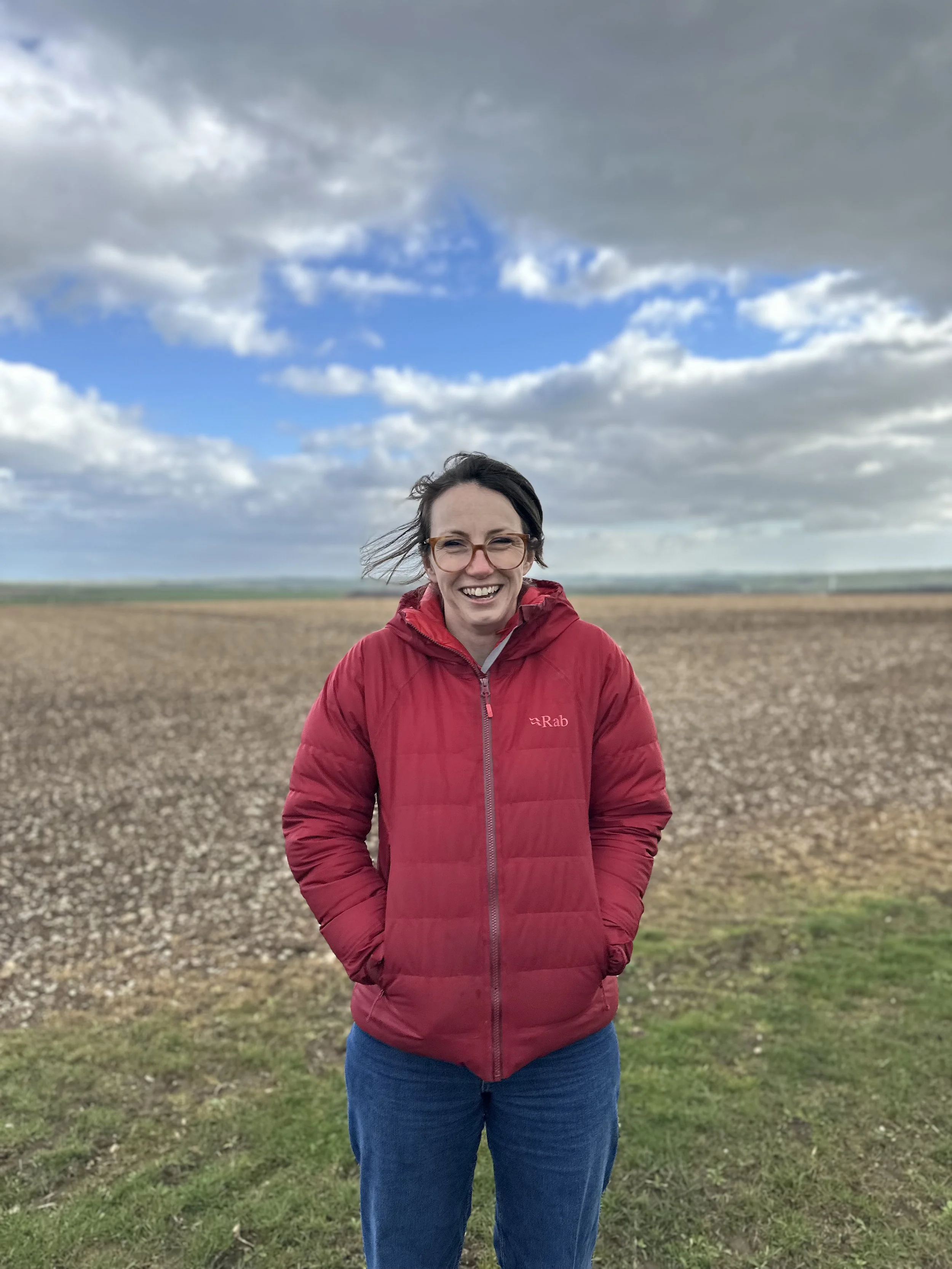
Jenni Ashwood at her Filey Bay Farm. Photo: Tom Pattinson
The main argument centres around the definition of ‘single malt’. Under Scottish rules, mashing, fermentation and distillation have to happen on a single site. Some English distilleries do things differently.
Spirit of Yorkshire, the producer behind Filey Bay, technically grows its barley on one site, brews on another and distils on another. However all of this takes place within a couple of square miles, and all on land owned by the same family. It’s just that the farm, the brewery and the distillery have been divided into different companies for accounting reasons.
“To us it is one entity,” says English producer Jenni Ashwood of Spirit of Yorkshire.
I stand next to Ashwood on a bright but windy day in Yorkshire, at the start of the barley planting season. From her farmhouse just three miles from the coast we walk to the warehouses where Wold Top Brewery is made, using the barley from the surrounding fields. From there it is taken just over the hill to Spirit of Yorkshire distillery where it is turned into the crisp, clean Filey Bay whisky.
“You are walking two miles down the road between sites owned by the same family, using the same grain, the same team and the same philosophy,” she tells me. “It is not like we are trucking in spirit from the other side of the country.”
English producers argue that if the GI fails, the result could be the exact opposite of what Scotland claims to want.
“At the moment there is nothing stopping someone importing some crap whisky and calling it English whisky,” says Nelstrop. “If you want to make English whisky it should be made in England. If they manage to stop it, all they have done is remove the rules for English whisky, which means anyone can do anything. We could buy cheap Scotch and call it English. That is nonsense.”
The dispute has become increasingly relevant because English whisky is no longer a curiosity. Twenty years ago there was not a single whisky distillery in England. Today there are 71. That growth has been rapid, but it has also been accompanied by quality.
In 2024, Nelstrop’s English Whisky Company won World’s Best Single Malt at the World Whisky Awards. Earlier this year, its Gently Smoked Sherry Hogshead was named World’s Best Small Batch Single Malt at the same awards. Late last year, White Peak’s Wire Works Bourbon Barrel was named The Whisky Exchange Whisky of the Year 2026, the first time an English whisky has won the title.
Quality not quantity
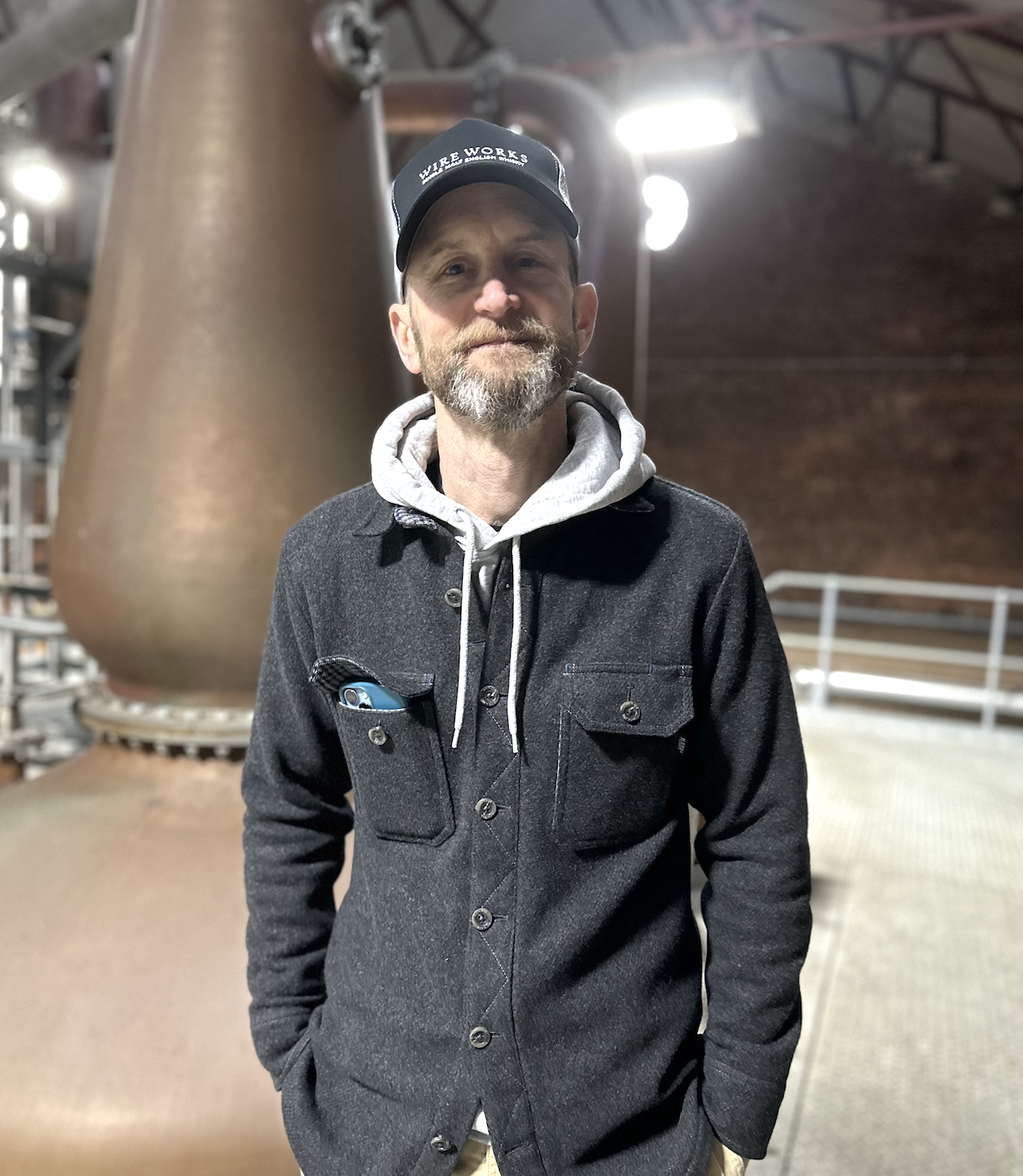
White Peak’s co-founder Max Vaughan. Photo: Tom Pattinson
Deep among the hills of the Peak District, on the banks of the River Derwent, lies a vast former wire works. I drive over a rusty bridge that connects a building filled with shiny copper stills and stainless steel vats to a warehouse where hundreds of barrels sit beneath a moss-covered corrugated roof to meet co-founder Max Vaughan.
I asked him about how the recognition by established retailer Whisky Exchange affected the business.
“It certainly made a huge impact, it definitely moved the needle,” Vaughan tells me. It shows. It’s a cold Saturday afternoon in March and visitors stream through the tiny shop on their way in and out of the tours, picking up bottles as they go. “In November and early December we sold more of that particular release than we normally do in nine months,” he says.
Wire Works is the brand name of the whisky made at White Peak’s distillery and the bottles are stunning. With twisted wire wrapped around the neck, it is a tribute to the industrial history of the site, but it also feels symbolic of English whisky more broadly. Modern, elegant, unique. Much of English whisky is being made in converted factories, on working farms and in old industrial buildings.
In Norfolk, The English Whisky Company has become one of the pioneers of the movement.
“Not only did [winning World’s Best Single Malt] help sales in the UK and abroad but now there is a true understanding that English whisky is truly good whisky,” says Nelstrop.
“They are behaving like the school-ground bully, but we are saying this is our national drink and we want to recognise it under our own rules.”
The distillery’s recent release of what it described as England’s first 18-year-old single malt, priced at £3,000 a bottle, sold out almost immediately.
In the Cotswolds, meanwhile, Dan Szor has built perhaps the most commercially successful English whisky distillery of all.
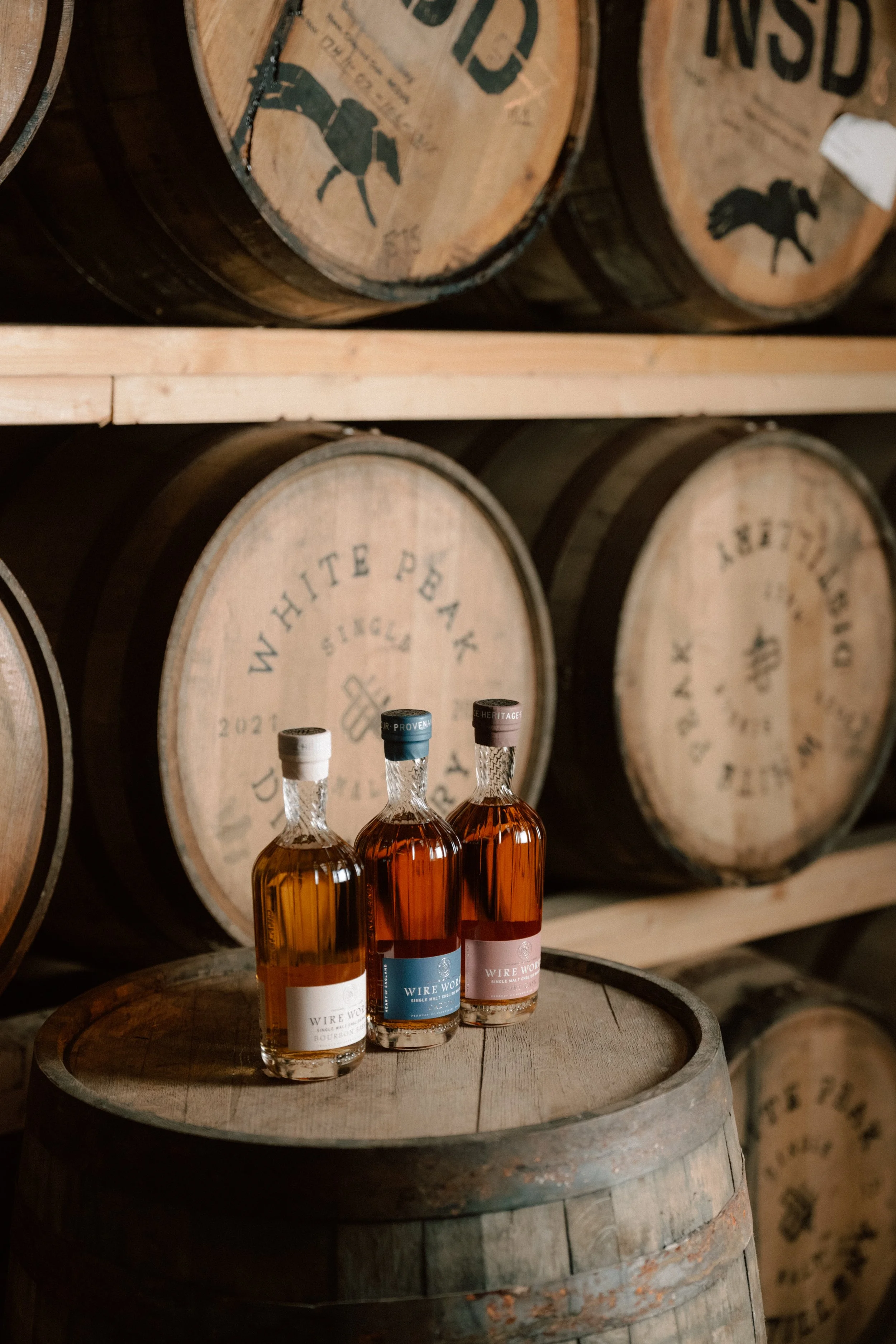
White Peak’s Wire Work’s bottles. Photo: White Peak
When he poured his life savings into the project in 2016, after stepping away from finance following his wife’s health scare, many thought he was mad.
“I thought with all the local barley grown here and 30 million visitors a year, and the way the brand of the Cotswolds appeals to aspirational people, we could do this,” he says.
The distillery, which Szor admits was partly inspired by nearby Soho Farmhouse, now attracts more than 100,000 visitors a year. Its whisky is stocked in supermarkets, bars and retailers across the country.
“I want to deliver value. I want to deliver a great flavour-to-price ratio,” says Szor. “Big, deep flavour at the right price.” And at around £45 for a bottle of the smooth, easy-drinking Signature – and a smart retail strategy to sit in as many on-trade pubs and restaurants and in supermarkets – it’s easy to see why it has become England’s biggest selling whisky.
That scale remains relative though. English whisky is still tiny compared with Scotch. All of England’s distilleries combined, collectively produce only around five million litres of spirit a year, around a third of what the Scottish giant The Macallan makes on its own.
Currently English whisky is not a threat to Scotch in terms of volume. What it does threaten is the idea that Scotland has a monopoly on making world-class whisky in Britain.
“What characterises the English whisky scene is that the distilleries are all relatively small,” says Vaughan. “So it gives us more flexibility in focus and perhaps in how we look at things. One of the ways we can do that is through flavour. That is a big part of it.” English whisky is less burdened by history than Scotch. It does not have to prove itself by doing things the old way, because the old way does not belong to it.
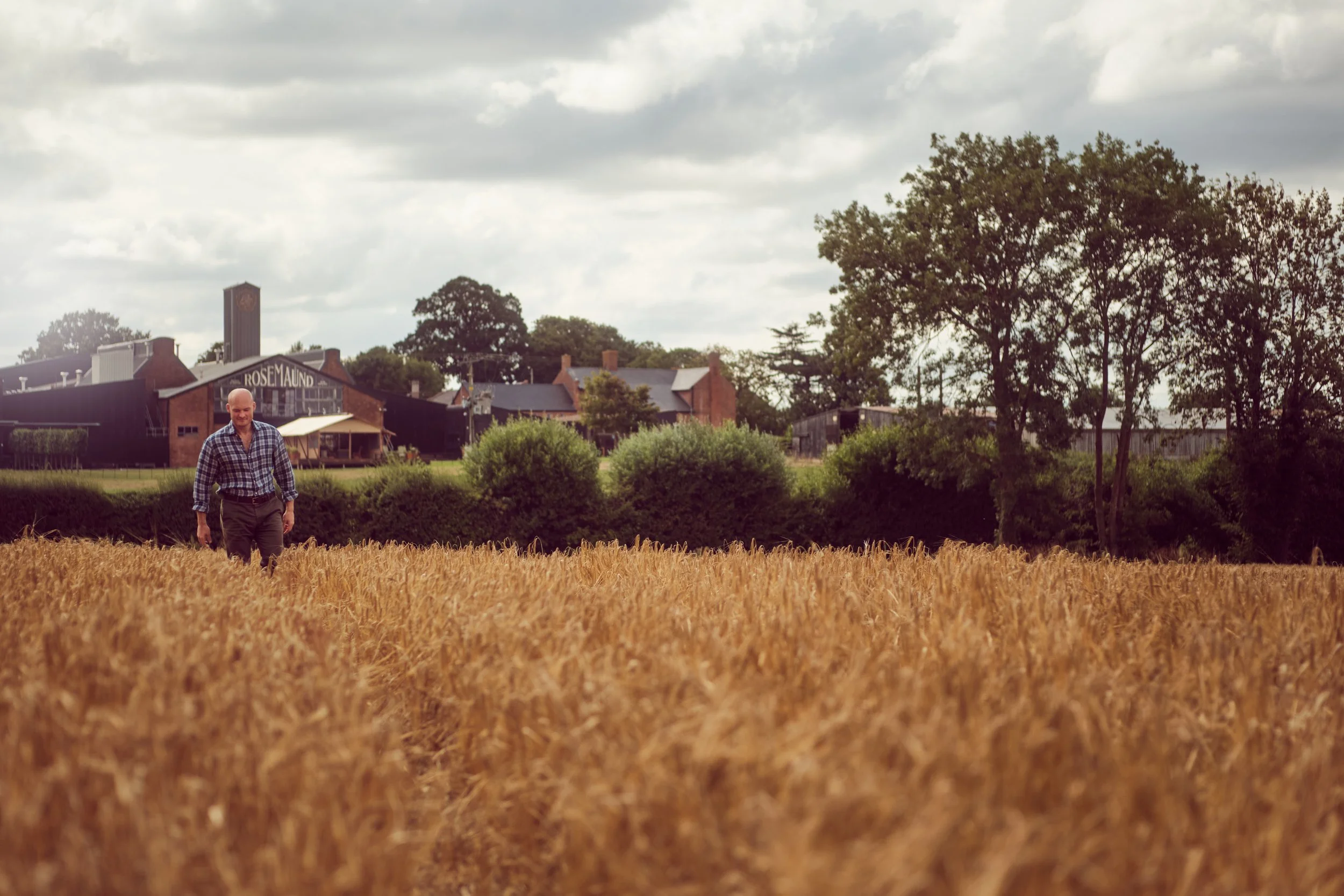
James Dashwood Chase surveys the Barley at Rosemaund Farm: Photo: Rosemaund
At Rosemaund in Herefordshire, James Dashwood Chase argues that provenance is exactly what younger drinkers increasingly want. For his family, who have been farming on this land for generations and previously sold their brand Chase Vodka to Diageo, building a brand with a 100-year business plan means starting with the raw ingredients.
“As my father used to say, it was never worth doing unless you made it from the ground up,” he says. “To be able to trace it back and start with the raw material is really important.”
Rosemaund grows its own barley, works with local brewers and has built much of its identity around Herefordshire farming, orchards and landscape. Chase believes that sort of traceability is becoming increasingly important as drinkers move away from anonymous big brands. Regenerative farming, including the use of heritage Maris Otter barley, is part of that.
Last year Rosemaund came out of nowhere with the launch of an inaugural 10-year-old whisky backed by Hollywood director Guy Ritchie. The bottles, priced at £126 each, sold out immediately with only a few available still on online retailers.
The Chase family first launched and sold Tyrrells crisps, then launched and sold Chase Vodka to Diageo. When Diageo moved production to Scotland, the family bought back the distillery and 500 casks of whisky they had laid down a decade before.
Even though they now have one of the largest stocks of aged English whisky, the focus for Lorna and James remains on the grain, the place and where the barrels are aged.
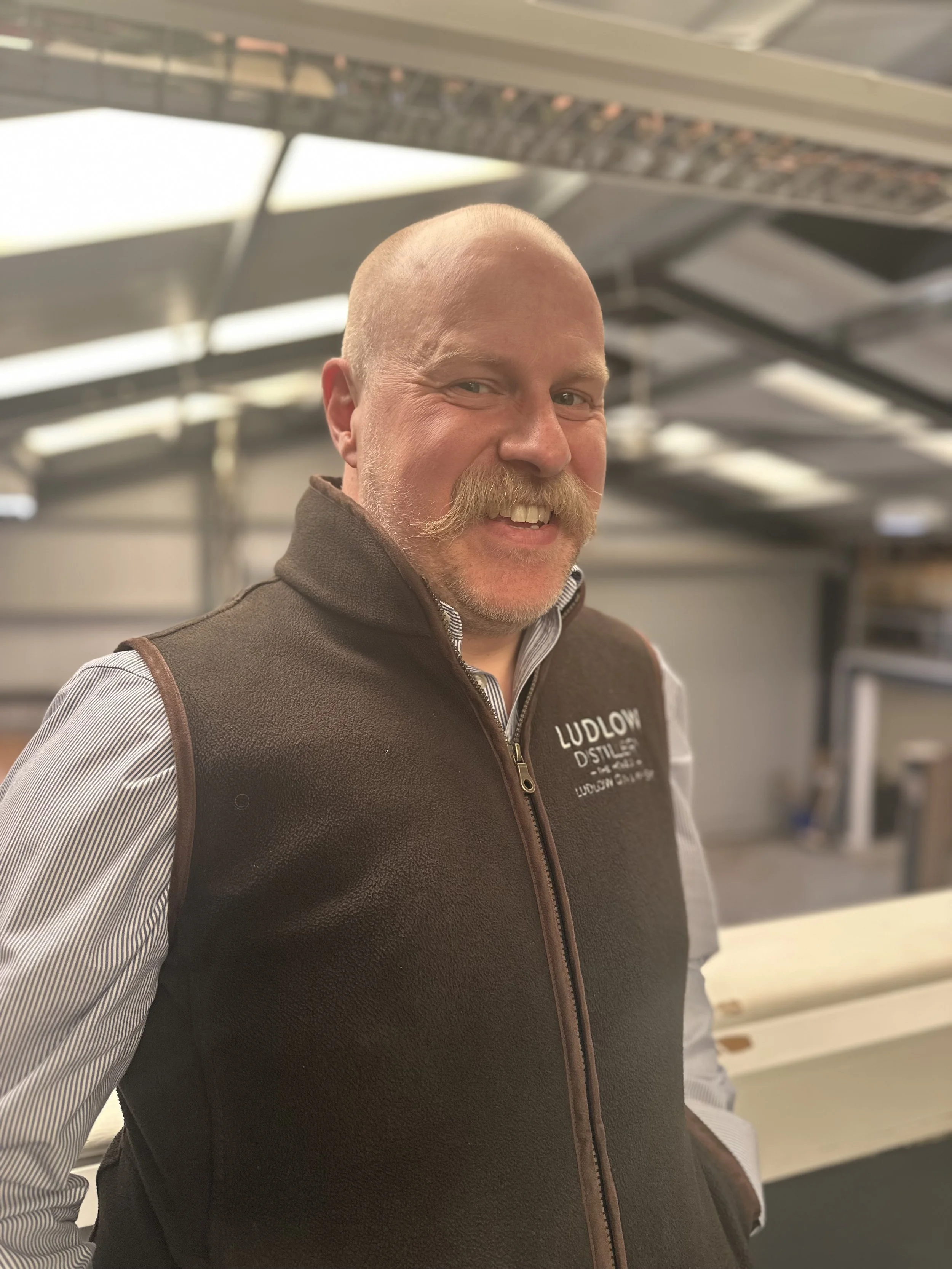
Shaun Ward of Ludlow Distillery. Photo: Tom Pattinson
As I walk around Rosemaund with James and Lorna Chase, the sense of place becomes clear. Nearly every step of the process is done on site, including ageing the barrels. According to Chase, that allows the orchard character of the surrounding landscape to become part of the whisky too.
At Ludlow Distillery, just a few miles north of Rosemaund, its founder and head distiller Shaun Ward argues that English whisky’s strength lies in its ability to stay small, flexible and slightly eccentric. Every bottle at Ludlow comes from a single cask release. The tiny volumes they produce allow them to create more unusual bottlings, including, on my visit, a whisky aged in a royal cider cask.
The English makers are banking on a new generation of whisky drinkers who are less interested in buying another anonymous aged Scotch from a multinational drinks company and more interested in a small-batch release from a founder-led distillery with a strong story behind it.
“The English industry is largely owned by founders, people who are excited and passionate,” says Nelstrop. “North of the border much of it is owned by PLCs and shareholders.
“We don’t release a whisky until it is perfect. We don’t bottle a barrel unless it is perfect. If you are making millions and millions of litres, you just find a barrel that doesn’t leak.”
That line might sound provocative, but it points to a broader shift in whisky. For decades, age was king. Today provenance, scarcity, flavour and collectability are starting to rival age as the markers of luxury.
“English whisky has such a great opportunity,” says Chase. “We have the freedom to experiment, to brand ourselves differently and to do things in a more interesting way.” At Rosemaund, Lorna, James and I sit at a long table to eat steak. The table was featured in the film The Gentleman, a gift from Guy Ritchie, and is now the centrepiece of the tours. “There is a new generation of drinkers who want something tactile,” says Chase. “They want experiences.”
Scotland looks over its shoulder
The market downturn has impacted the Scotch market. Demand has slowed. Tax rises, tariffs and rising costs have squeezed margins. A report by Begbies Traynor Group found that 19% of Scottish distilleries were facing significant financial distress in 2025.
There is also the so-called whisky loch: billions of pounds worth of unsold stock sitting in Scottish warehouses after years of overproduction.
But according to Chase and many of the others I spoke to while visiting more than a dozen English distilleries in recent weeks, it is an opportunity for the English market.
“People are drinking less but drinking better. It has become much more refined. It is about sharing a bottle with the right people,” Chase says.
Scotch remains one of Britain’s most powerful exports and there is no serious chance that English whisky is about to overtake it. But for the first time in decades, Scotch is having to look over its shoulder. That perhaps explains why the GI battle has become so heated.
“It would be very damaging for the reputation of single malt whisky from the UK, and by extension Single Malt Scotch Whisky, if English whiskies were allowed to describe spirit as ‘single malt’,” says Mark Kent, chief executive of the Scotch Whisky Association.
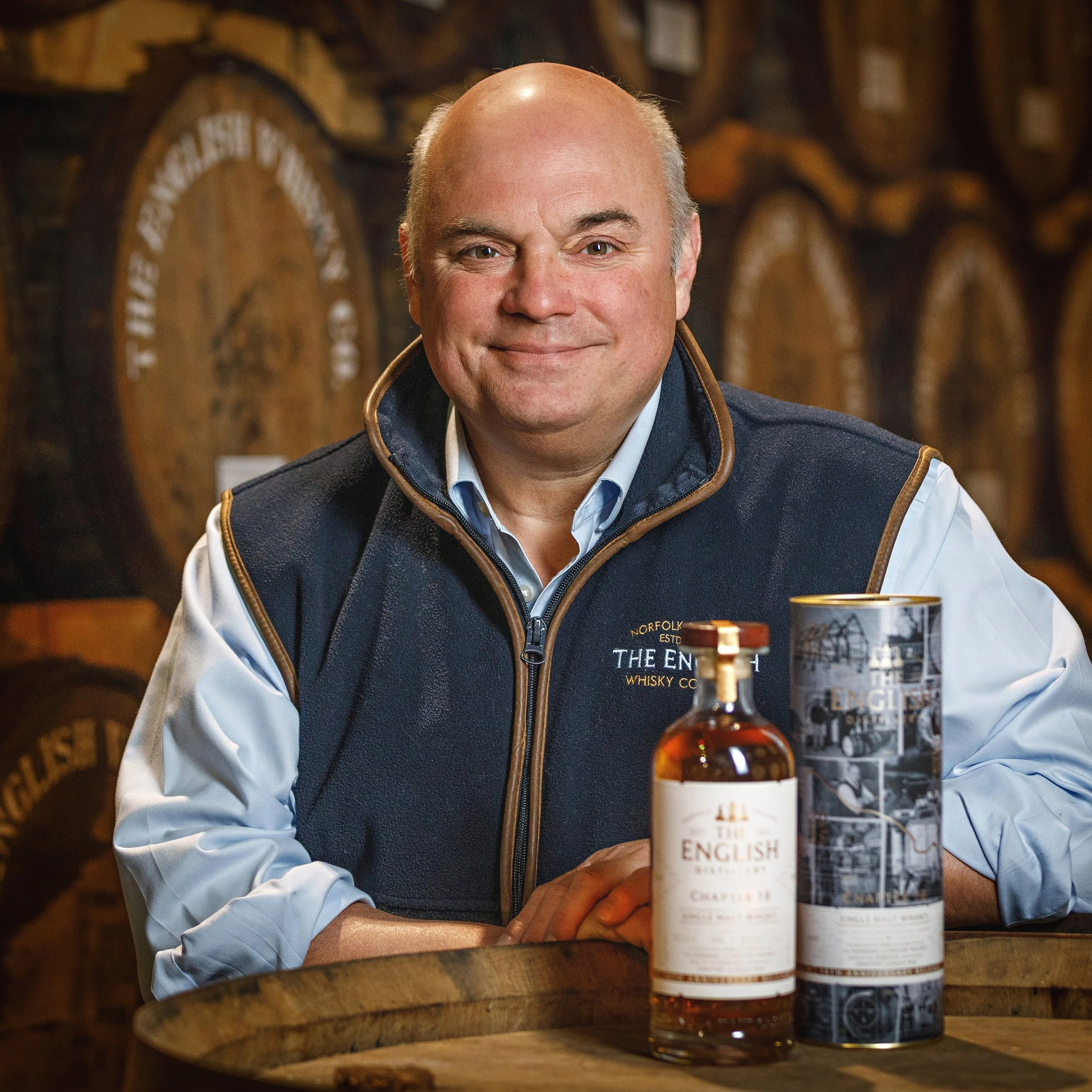
Andrew Nelstrop is “incredulous” that the SWA are digging in their heels to stop the English GI. Photo: English Whisky Company
English producers see things differently.
“As an English producer, I am incredulous they are digging their heels in,” says Nelstrop. “We have been calling it single malt for years and we are well within our rights because we are following the European definition.
Whatever DEFRA decides in the coming weeks, English whisky already feels established in the minds of drinkers.
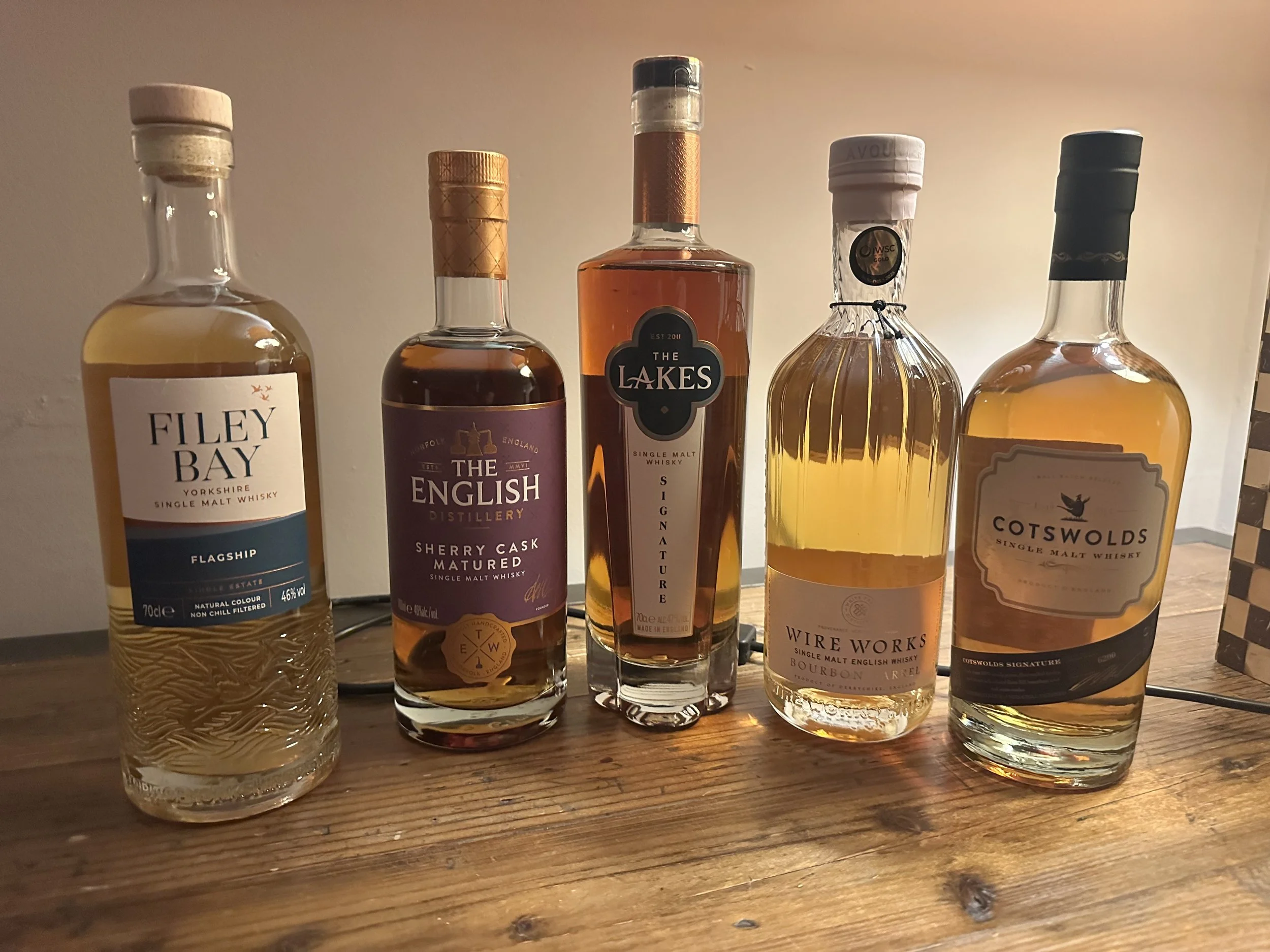
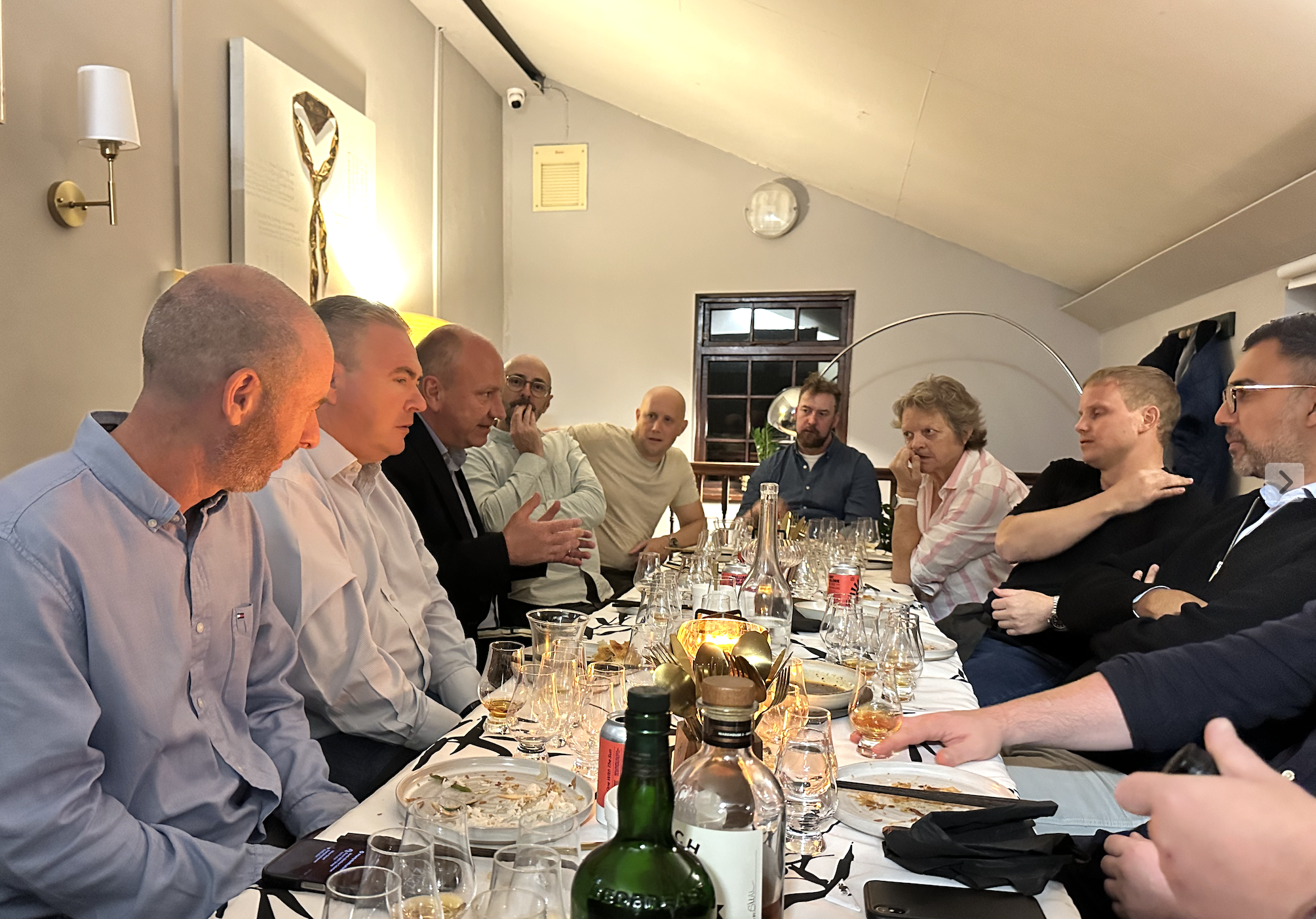
A recent Barley tasting focused exclusively on English whisky. Photo Tom Pattinson
At a recent tasting I poured five English whiskies for a room full of sceptical whisky lovers: Wire Works Bourbon Barrel, Filey Bay Flagship, Cotswolds Signature, The Lakes Signature Malt Signature and The English Whisky Company Sherry Cask.
Guests were struck not only by the quality, but by the range. There was fruit, spice, waxiness, smoke, sweetness, texture and depth. Some felt close to Scotch. Others felt entirely their own thing. That is perhaps the most exciting thing about English whisky. It does not yet have one single flavour profile or one fixed identity. It is still being invented.
Scotland may still dominate whisky in scale, history and exports, but English whisky no longer feels like an outsider. The fight now is not about whether it deserves to exist. It is about who gets to decide what it becomes.