The Last Drop finds life in a 60-year-old ghost whisky
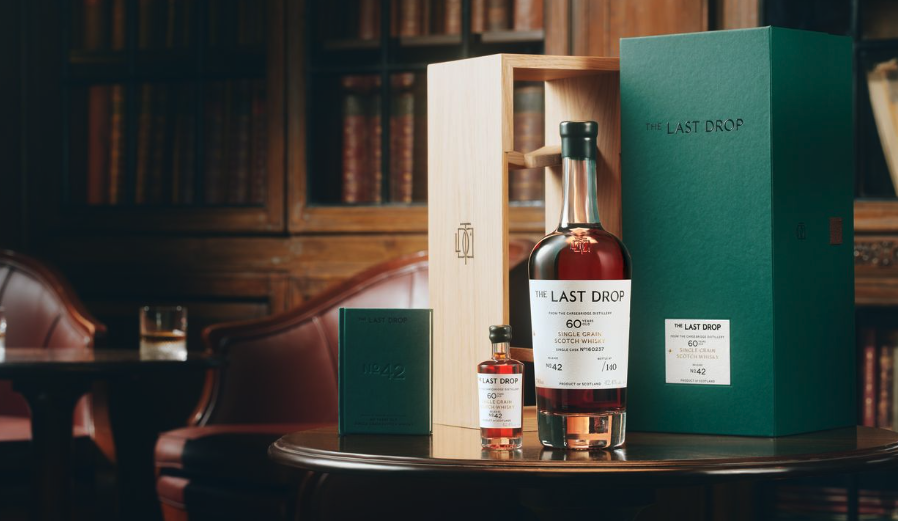
The Last Drop’s new whisky release comes from a long-shuttered Scottish distillery, costs £3,700 a bottle and tastes far fresher than any liquid with six decades behind it has a right to
The strange thing about The Last Drop’s new 60-year-old Carsebridge is that it does not taste especially ancient. It should, really. It was filled into cask in November 1965, comes from a Lowland grain distillery that closed in 1983, and arrives with the sort of age statement that makes collectors lean forward and drinkers wonder whether anyone will ever actually pull the cork.
Just 140 bottles have been released, priced at £3,700 each, so it sits firmly in the world of whisky as luxury object: individually numbered, heavily storied, more likely in some cases to be placed on a shelf than poured into a glass. That is the awkwardness with bottles like this. The more rare and expensive they become, the further they can drift from the simple thing whisky is meant to do, which is be opened, shared and drunk.
This one deserves to be drunk. It is bright, soft and surprisingly easy, with vanilla, cream, fruit and toffee rather than the dry, spicy, heavily wooded character that can make very old whisky feel more like a punishment than a privilege. It carries its age lightly, which is not always the case when a spirit has spent 60 years in oak.
Colin Scott, The Last Drop’s master blender and formerly one of the great names at Chivas Brothers, seems to take particular pleasure in that restraint. “You have those toffee notes, those sweet notes,” he says, describing the creaminess and smoothness that can come from grain whisky matured in American oak ex-bourbon barrels. “You have a rich beginning. It holds on and gives you a lovely, wonderful, soft, gentle finish.
“One of the things I love about it is that it is obviously very old, but it does not take on any more wood than it needs,” Scott notes. “It has those soft, fruity flavours and this burnt coffee character, but it is not over-oaked.” There is, he adds, “a hint of spicy oak in there, but it is not predominant at all”.
The 2026 Collection also includes a 25-year-old Trinidad rum from Caroni, and an impressively smooth tequila too, but the Carsebridge was always the story. Grain whisky does not usually get the romance of single malt, despite doing much of the heavy lifting in Scotch. It is the engine room of blends, not the name above the door, which is partly why a 60-year-old single grain from a lost distillery feels interesting rather than merely expensive.
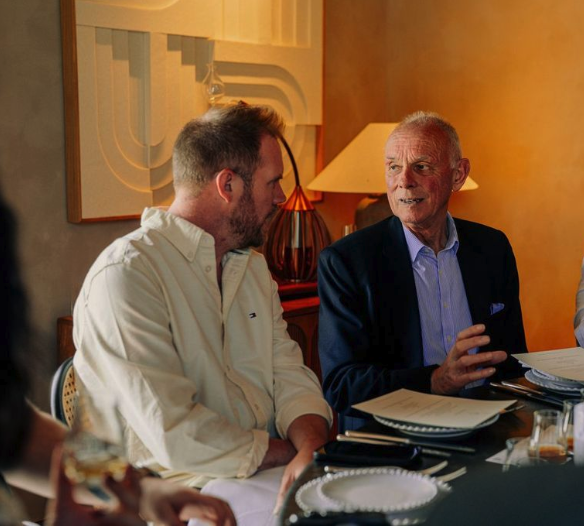
Colin Scott, The Last Drop’s master blender tells Tom Pattinson about Carsebridge
Built in 1799 near Alloa, Carsebridge’s began as a malt whisky distillery before being rebuilt as a grain distillery in 1852. Its location took water from the hills, the River Forth was the transport link to move the grain, malt, maize and eventually whisky, and coal nearby was minded to power the place. By 1980 it had become the largest grain whisky distillery in Scotland. Three years later, it was closed.
That closure gives the bottle its ghost-distillery pull, although Scott’s telling was refreshingly unromantic. Carsebridge was an industrial site that made whisky at scale, not a misty Highland ruin waiting for a marketing department to discover it. The romance has come later, because what remains is finite. “You will never taste it again,” Scott said of this release, because it comes from “a whisky distillery that ceased production”.
The Last Drop has built a business around that kind of finality. Rebecca Jago, the company’s director of brand experience, is the daughter of co-founder Tom Jago, who started the business with James Espey after long careers inside the drinks industry. Their original plan, she said, was almost modest: after years of building brands for large companies, they decided to go “to the opposite end of the industry” and “start a small company and find an exceptional old Scotch whisky and bottle it.
“The original idea was simply to prove they could do it and then go off into the sunset,” Jago said, adding that when the company launched, her father was 82 and Espey was 65, “so if any of you think you are retiring, there is no need”.
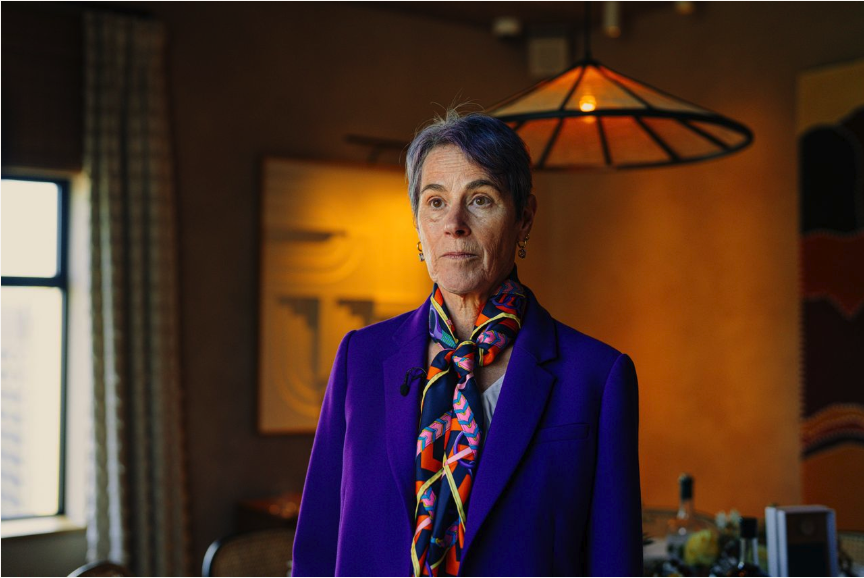
Rebecca Jago, the company’s director of brand experience, is the daughter of co-founder Tom Jago
Instead, The Last Drop moved from Scotch into Cognac, rum, Irish whiskey, Japanese whisky, bourbon and tequila, describing itself now as a curator of “the world’s most remarkable spirits”. Jago is aware that “oldest” and “rarest” can become lazy words in this space. “Nobody wants to claim to be the best, or the greatest, or the oldest, or the rarest,” she said. “We want to talk about the discovery of wonderful spirits that allow you to open your eyes to categories you might not have known before.”
That is the stronger way to understand this Carsebridge. Not as a bottle that needs to impress you because it is 60 years old, but as a whisky that shows what long-aged grain can do when the cask has behaved itself. It is not leathery or overbearing. It does not creak. It has sweetness, lift and a rather dangerous drinkability for something priced like a small second-hand car.
Whether many buyers will actually drink it is another question. At £3,700, some bottles will inevitably be collected, displayed, traded or saved for an occasion that never quite arrives. That is the odd fate of much ultra-aged whisky: the better the story, the rarer the liquid and the higher the price, the greater the risk that it becomes too valuable to enjoy.
Which is a shame, because the joy of this whisky is not that it survived 60 years in a cask. It is that after all that time, it still feels alive.