The man who collected a century of Johnnie Walker
What began with a $130 bottle of Blue Label became a 3,200-piece record of Johnnie Walker’s history, now heading to auction this September
In 1999, Frans Op den Kamp was on his way home from a business trip to New York when he bought a bottle of Johnnie Walker Blue Label for $130. It turned out to be the beginning of something considerably larger than he could have imagined.
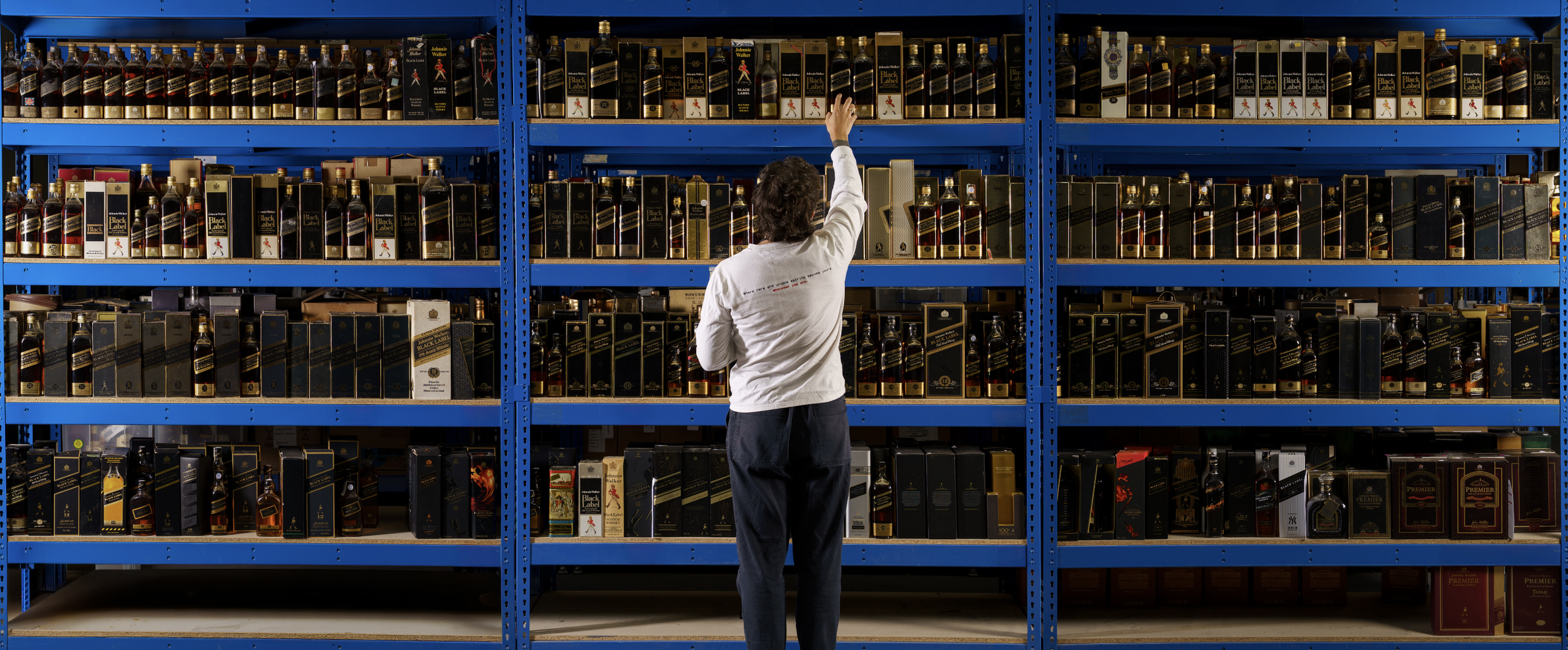
More than two decades later, Op den Kamp has amassed more than 1,600 full-size bottles, 600 miniatures and 1,000 pieces of advertising and memorabilia devoted to a single whisky brand. This September, the collection will be broken up and sold by Whisky Auctioneer in what it describes as the largest and most comprehensive collection of Johnnie Walker ever brought to auction, running from 11 to 21 September.
The headline numbers are impressive, but they also undersell what Op den Kamp has put together. Look beyond shelf after shelf of Red, Black and Blue Label and the collection becomes a physical record of more than a century of Scotch whisky – changing tastes, bottles, closures, labels, advertising, export markets and the rise of one of the world’s most recognisable drinks brands.
“Johnnie Walker has been a constant companion throughout my collecting journey,” says Op den Kamp. “What began with a bottle of Blue Label bought in 1999 grew into more than two decades of learning and travelling from discovering rare market-specific bottlings to bringing together the full story of Johnnie Walker across a century.”
There were warning signs that Op den Kamp might become a serious collector long before whisky entered the equation. He has spoken of collecting Smurfs and beer cans as a child before eventually narrowing his attention to Johnnie Walker.
His work took him around the world, which proved useful when hunting a brand famous for producing different releases for different countries and duty-free markets. Airports, bars, hotels and shops became part of an extended treasure hunt, particularly as he began tracking down scarce city editions and bottlings that had appeared only in tiny numbers.
Over time the collection grew beyond modern releases and into much older bottles and advertising, while Op den Kamp’s knowledge became substantial enough for other collectors and industry figures to ask for his help dating, authenticating and valuing bottles.
That is where the collection becomes more interesting than sheer scale.
Whisky historian Dr Nick Morgan, author of A Long Stride: The Story of the World’s No.1 Scotch Whisky, argues that its breadth allows the development of Johnnie Walker to be followed through physical objects rather than company histories alone.
“Johnnie Walker’s history is, in many ways, the history of Scotch whisky becoming a global drink in the twentieth century,” says Morgan. “Having spent years researching the brand, I know how complex and fascinating that story is and what makes Frans’ collection so remarkable is the way it brings that history together in physical form to tell it.”
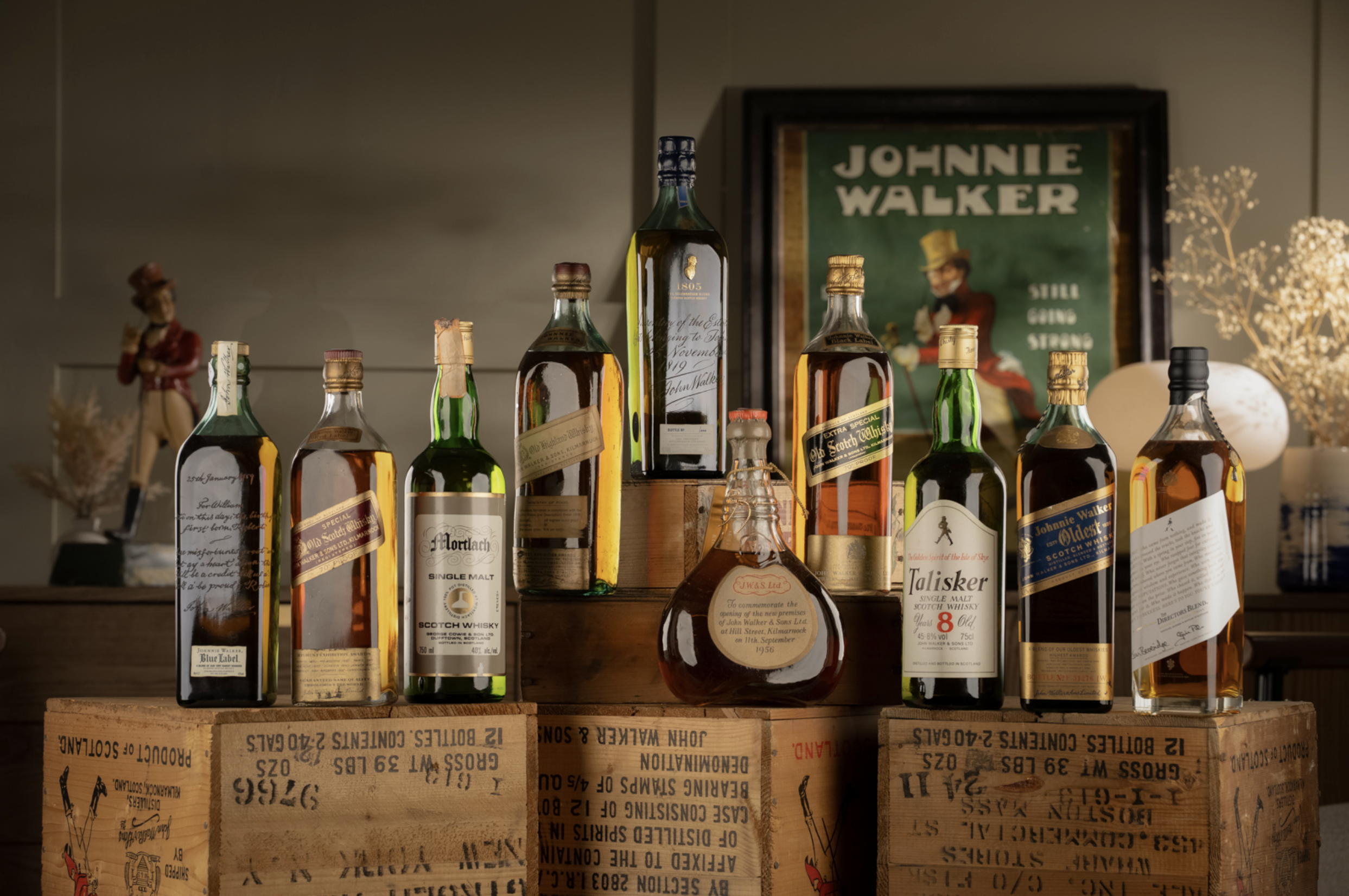
Among the earliest bottles is a rare White Label thought to date from around 1918. At the beginning of the 20th century, the Walker range included Old Highland Whisky, Special Old Highland Whisky and Extra Special Old Highland Whisky, carrying white, red and black labels. Drinkers did what drinkers often do and simplified them into White Label, Red Label and Black Label, with the latter two eventually becoming names recognised around the world.
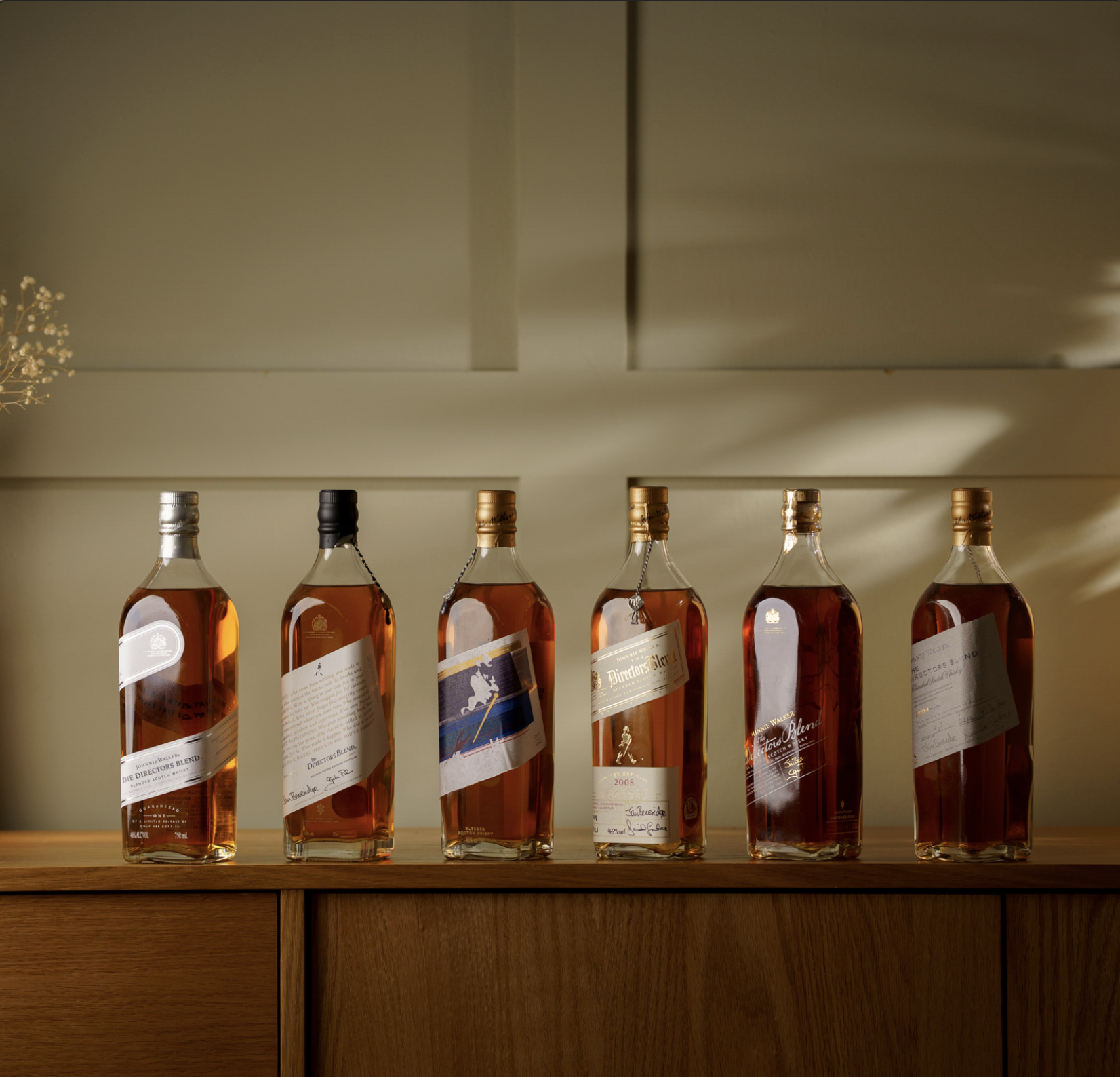
Johnnie Walker Directors Blend Set
Elsewhere, old bottles chart much broader changes in Scotch. Glass became lighter and more consistent, corks gave way to screwcaps, age statements appeared and disappeared, labels changed with successive Royal Warrants and the language around whisky evolved.
One bottle even carries an early version of the non-refillable closure introduced by Walkers in 1912 to prevent publicans and merchants refilling genuine bottles with inferior spirit.
Some of the liquid itself also represents whisky that would be difficult, if not impossible, to reproduce today. Historic Johnnie Walker blends could contain whiskies from distilleries that have since disappeared, while Black Label from parts of the 20th century can reflect production practices no longer used, including the influence of paxarette, the sweet sherry concentrate once used to season casks.
Op den Kamp, fortunately, was never entirely opposed to opening bottles. His philosophy was that whisky collecting should include drinking it, and when possible he bought two – one to keep and another to open and share.
At the more extravagant end of the collection are bottles that few drinkers would ever have encountered. There is the 1805 Celebration Blend, with just 200 bottles created, a complete collection of the Directors Blends produced between 2008 and 2013, and numerous special editions of Blue Label commemorating everything from Robert Burns to Bruce Lee and Kilmarnock Football Club.
Perhaps the most excessive is a John Walker & Sons Signature Blend produced with Formula One world champion Jenson Button, one of only 25 bottles made and originally offered by private invitation through the Johnnie Walker House in Shanghai for £30,000 each. It came in a carbon-fibre case containing an actual wheel nut from Button’s McLaren used during the 2011 Hungarian Grand Prix.
Op den Kamp saw the bottle when it was released but could not afford it. Years later, after continuing to search, he finally found one privately in London.
The collection also includes more than 1,000 advertisements and pieces of memorabilia, which trace how Johnnie Walker sold itself around the world as effectively as the bottles trace changes in the whisky. The Striding Man first appeared in 1908 and became increasingly central to a brand expanding across Europe, America, Asia and beyond.
“These objects reveal how the brand evolved from the first appearance of the iconic Striding Man figure in 1908 into the world’s best-selling Scotch whisky,” says Morgan. “Collections like this are invaluable because they allow us to experience history not just through documents and written records, but through the bottles, labels and objects that people actually bought, drank and occasionally kept for posterity.”
After more than 20 years, Op den Kamp has decided that his own part in that history is complete.
“Parting with the collection is certainly not easy, but I feel I have achieved what I set out to do,” he says. “I hope these bottles find their way to collectors who discover something that resonates with them, whether that’s a particular whisky, a moment in Johnnie Walker’s history or simply the thrill of the hunt.”
There is also a more prosaic explanation. After several thousand bottles, Op den Kamp has admitted that space at home was becoming rather precious.
By late September, the collection he spent more than two decades assembling will begin scattering around the world again. Some bottles will disappear into other collections, some memorabilia will end up on walls and, hopefully, at least a few of those old Red and Black Labels will eventually surrender their corks.