The time for Retribution
After six years of experimentation, Richard Lock is dropping gin and rum, phasing out peat and narrowing his Somerset distillery around a new house style built on heritage barley, brewers’ yeast, direct fire and applewood smoke
Tucked into a collection of old farm buildings outside Frome in Somerset, Retribution Distilling is remarkably easy to miss. Barely a kilometre away is Babington House, Soho House’s West Country retreat, where members stretch out beside the pool in the summer sun with cocktails in hand. Physically, the two are neighbours. They could hardly feel further apart.
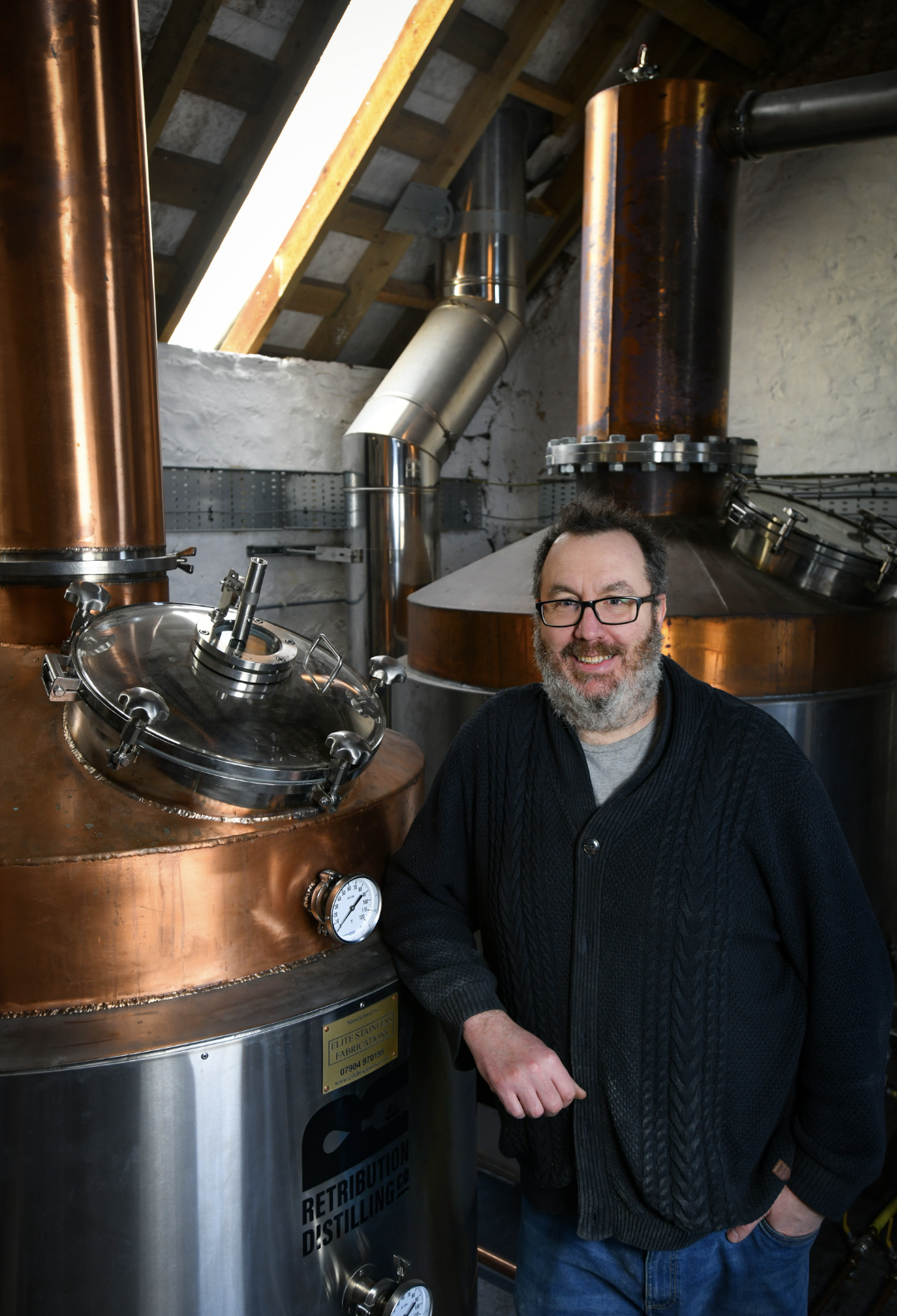
Richard Lock, founder of Retribution Distillery
At Retribution there are sacks of grain, old barns, gas tanks and pieces of machinery that have to be shifted around depending on what Richard Lock, the distillery’s very hands-on founder, happens to be making. When I visit, he tells me he will be back at 4 o’clock the following morning to move the mill, put half a tonne of grain through it and start another mash.
That slightly obsessive approach is becoming more pronounced. After six years of experimentation, Lock has published what he calls a Declaration of Intent, announcing that Retribution will stop producing gin and rum, phase out its use of Somerset peat and concentrate increasingly on whisky made with heritage barley, brewers’ yeast, long fermentation, direct-fired stills and applewood smoke. Vodka survives, but only because Lock has designed it into the whisky-making process by redistilling recovered spirit that might otherwise be wasted.
Whisky was always where he was heading. Lock spent around a decade working offshore in oil and gas, latterly as a hydrographic surveyor, before home brewing led him to study brewing and distilling at Heriot-Watt University in Edinburgh. A tiny still in a garden shed followed, then a 400-litre alembic, before Retribution moved to the farm in February 2020. His first whisky cask was laid down that December.
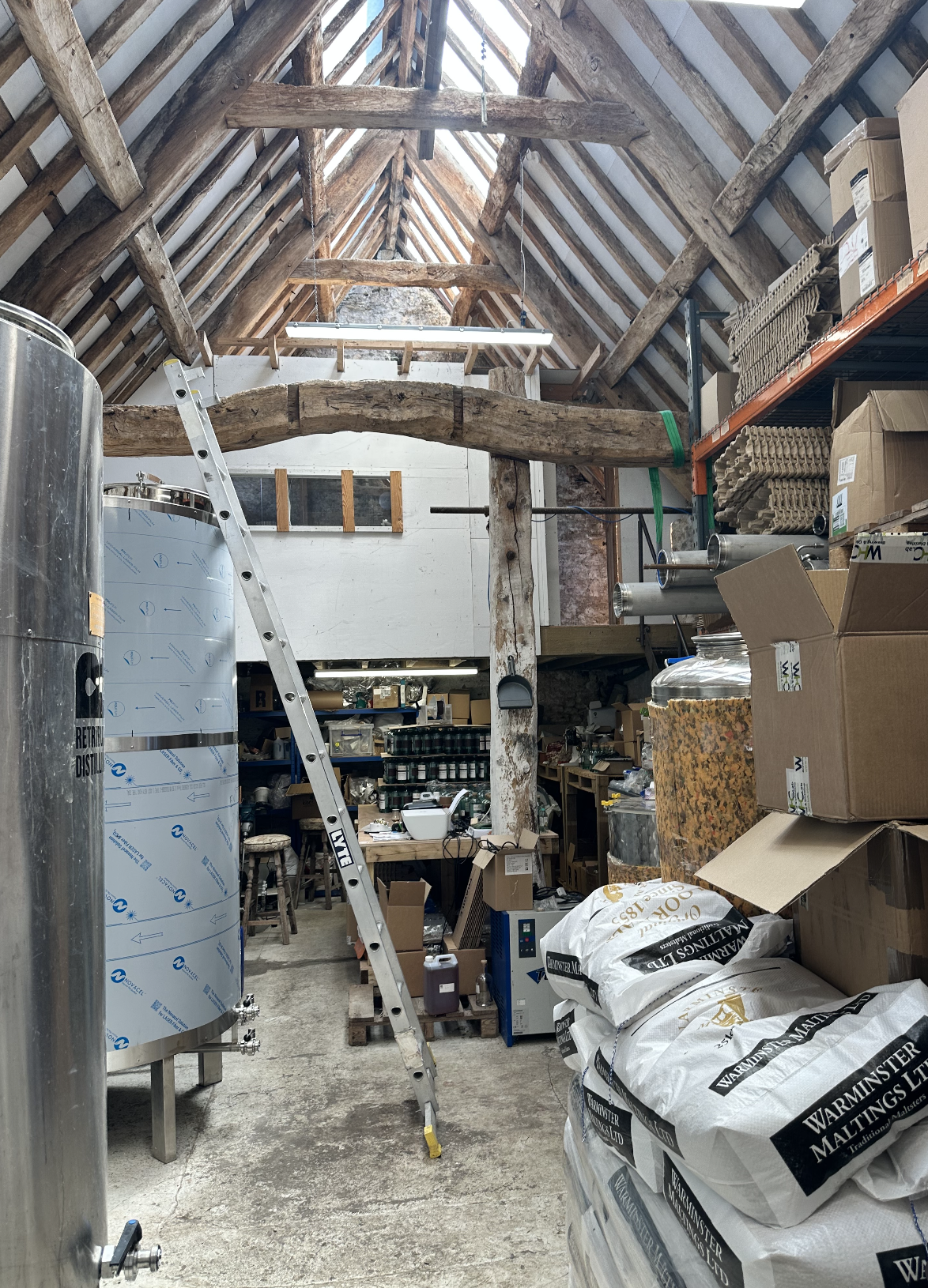
The historic barn that is home to Retribution
The distillery name comes from that previous career. “I spent a decade working offshore in the oil and gas industry, and building this distillery was my ‘payback’, a way to create something positive, grounded, and environmentally responsible.”
Lock was not one of the very first of England’s modern whisky makers – The English Distillery in Norfolk began producing spirit in 2006 – but he arrived while the revival was still relatively young and was certainly one of the pioneers in shaping how English whisky can be. His first cask was filled in August 2021 and released as W001 – the founders cask – in January 2025.
England now has more than 70 whisky distilleries, ranging from tiny founder-run operations to ambitious new projects backed with serious capital.
Those larger arrivals inevitably command attention, but much of the character of English whisky has been built by people operating at the other end of the scale, rising at dawn, filling a handful of casks a year and working out what English whisky might taste like before anyone had written much of a rulebook for it. Lock belongs firmly in that camp.
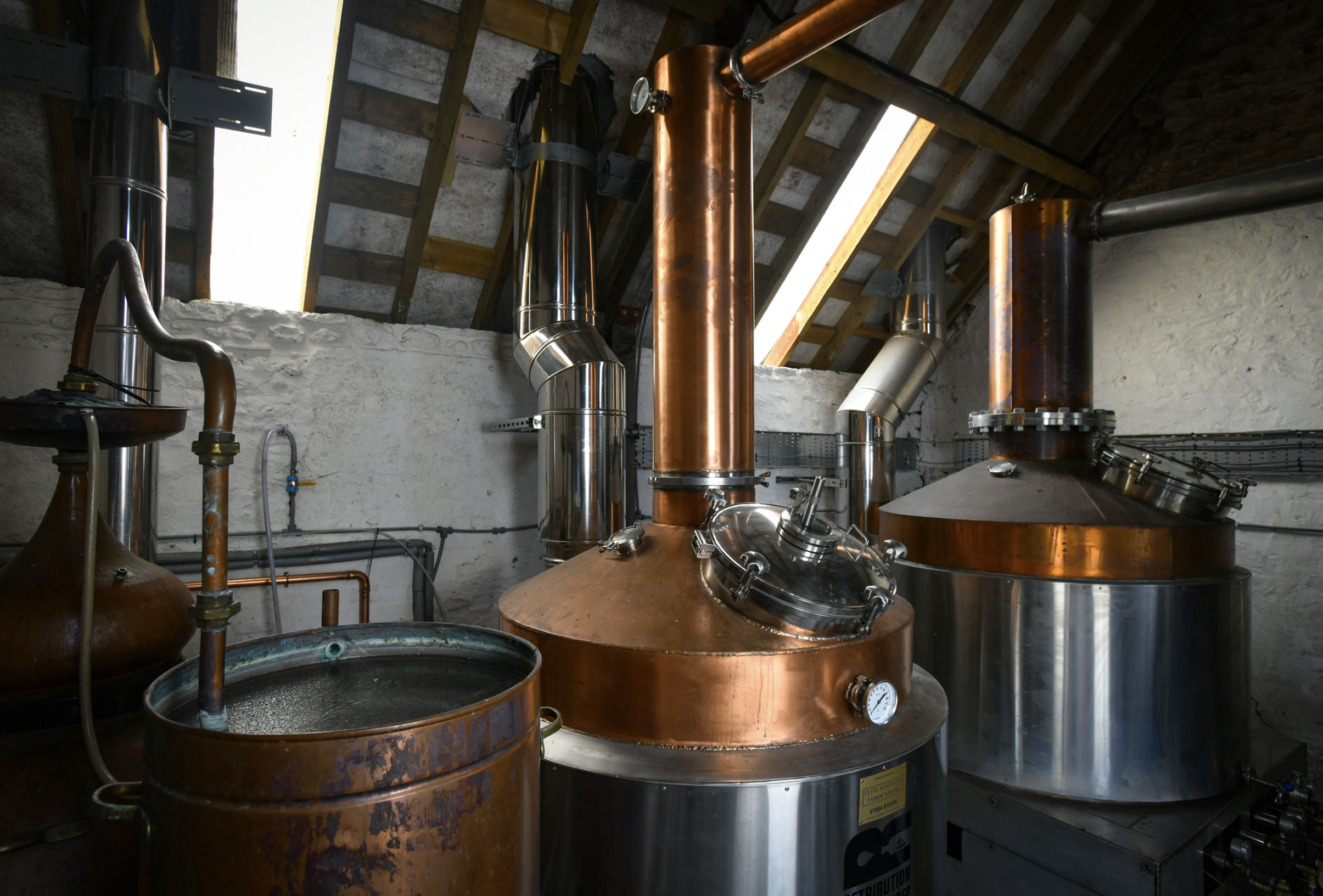
Much of Retribution Distillery has been hand built by Lock himself
When he arrived at the farm, his equipment was so small that producing enough spirit to fill a single bourbon barrel could take six weeks. Eventually he raised the money for something larger, but rather than order a conventional Scottish-built whisky still, he designed his own 1,800-litre direct-fired copper wash still and found a fabricator to make it. A 1,000-litre spirit still followed.
“I can weld. I know my way around three phase panels. But I’m not an engineer by any stretch,” he says.
Direct flame is important to Lock because he believes the additional heat encourages Maillard reactions and caramelisation against the copper, adding weight and a creamy texture to his new make. It is less convenient than steam, but convenience rarely seems particularly high on his list.
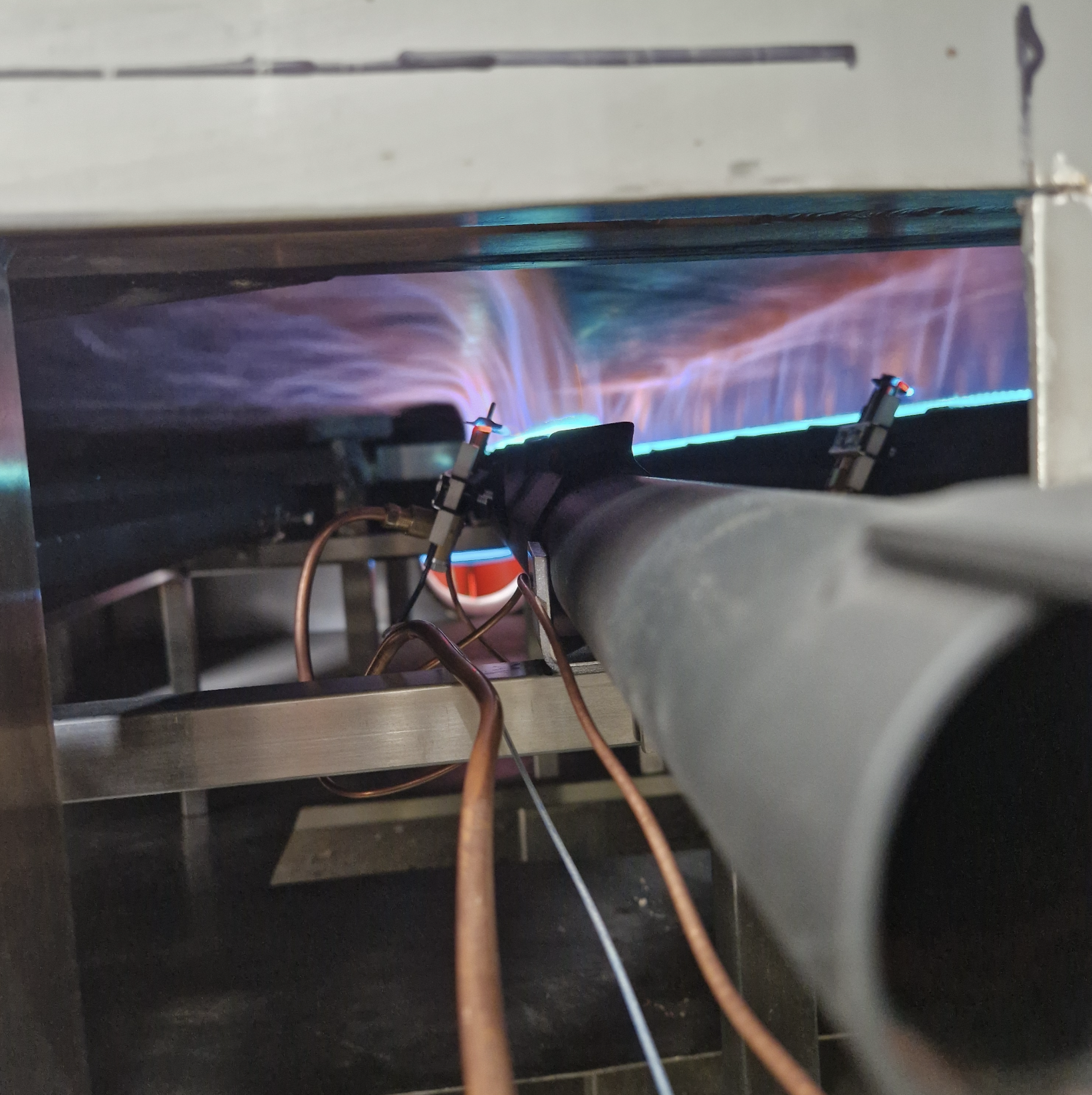
Direct heat add encourages Maillard reactions and creates a creamy texture
What makes him unique in the English whisky space is the extent to which he questions and controls almost every stage himself. Malt comes from nearby Warminster Maltings, with Retribution increasingly favouring older varieties such as Plumage Archer, Maris Otter and Chevalier rather than modern barley bred primarily for consistency and yield. He has moved towards brewers’ yeasts rather than more efficient distillers’ strains, while fermentations last at least seven days and can stretch towards two weeks.
The consequences are not especially sensible from an accountant’s perspective. Lock estimates his alcohol yield can fall towards 300 litres of pure alcohol per tonne of grain, compared with something closer to 380 or 400 litres at more efficiency-focused operations.
“This is not the way to do it,” he laughs. “This is the exact opposite of the way to do it.”
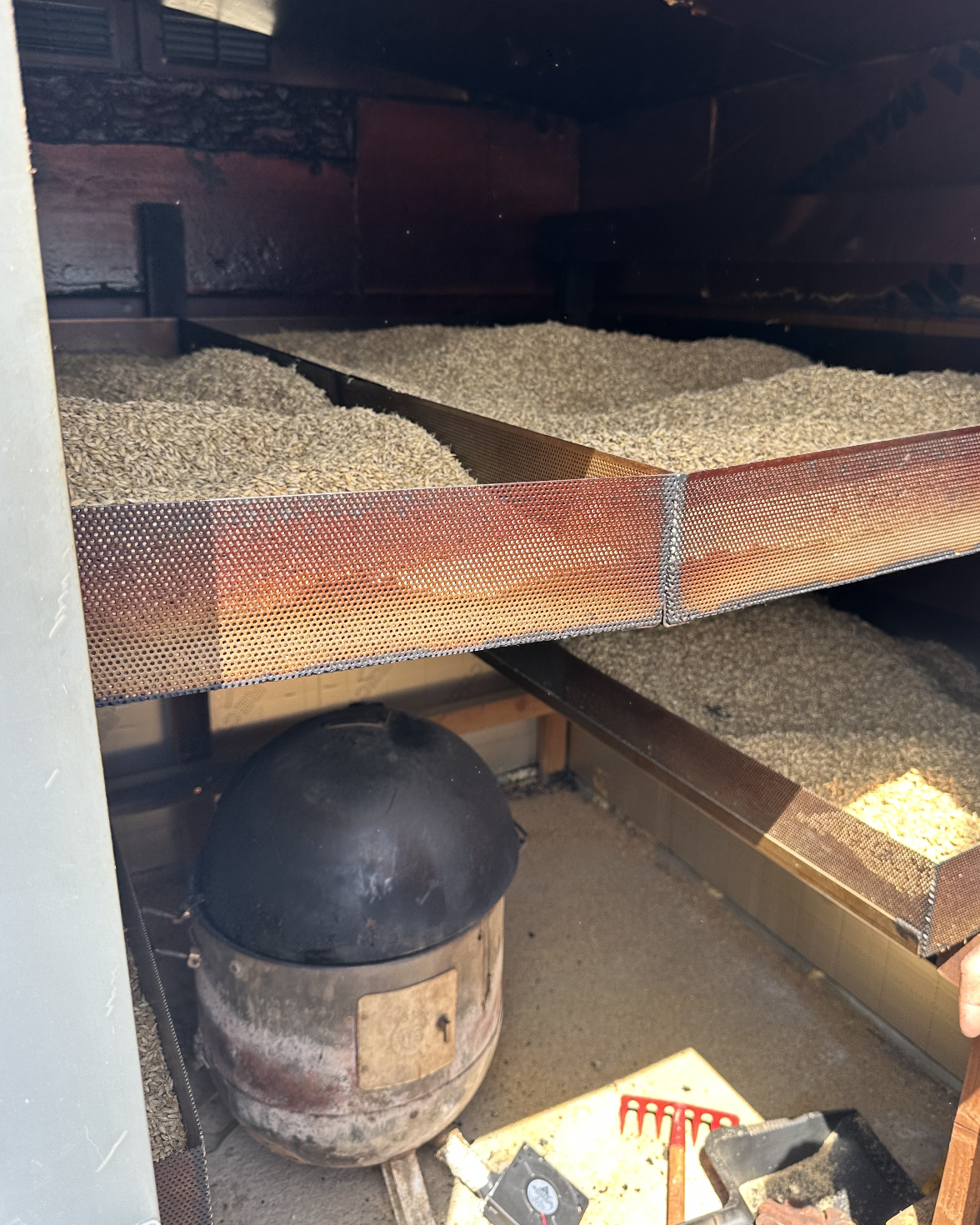
Lock built his own smoking and kilning set-up
Then there is the smoke. Rather than simply buying peated malt, Lock spent around a year securing access to peat from the Somerset Levels and built his own smoking and kilning set-up in a metal shed at the distillery. He would collect green malt from Warminster after germination but before kilning, bring roughly 130kg to 140kg back to the farm and spend more than two days drying and smoking it himself.
Somerset peat contains large amounts of reed, offering the possibility of a distinct local style of smoke, but there was an uncomfortable contradiction. Peatlands are important carbon stores and digging up a finite resource increasingly sat badly with a business Lock had conceived partly as environmental repayment for his oil and gas years.
After experimenting with different woods, he found his answer in Somerset’s orchards. Future smoked Retribution whisky will increasingly use locally felled applewood from orchard management and end-of-life trees.
“It is not peat, and I don’t want it to pretend to be,” he says. “It has its own smoke: cleaner, fruitier, and beautifully suited to the spirit I want to make. To be honest, I think I might even prefer it.”
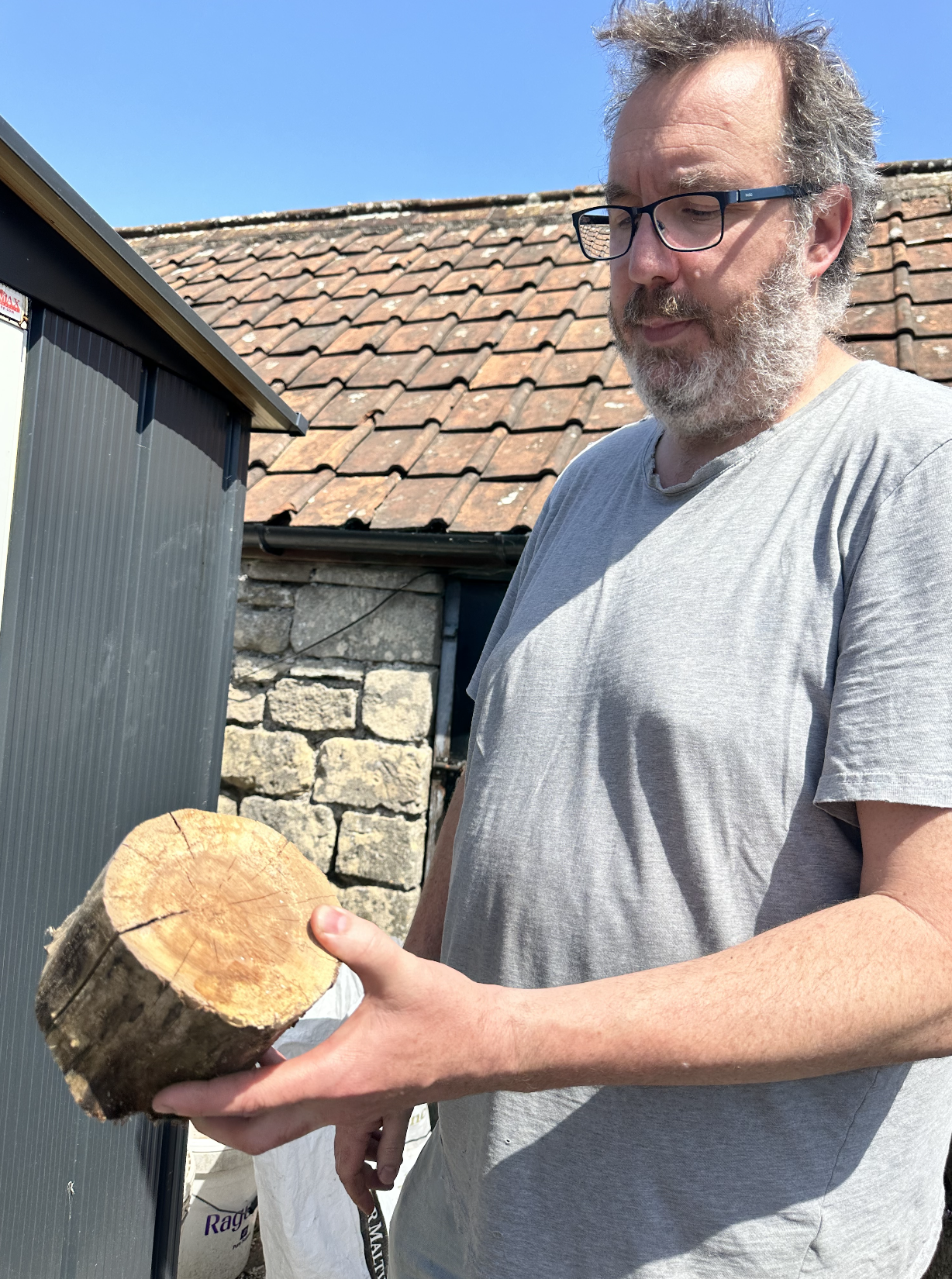
Future smoked Retribution whisky will increasingly use locally felled applewood
The change does not mean the experiments disappear. His warehouses contain bourbon, PX, Oloroso, port, red wine, Muscatel and chestnut casks, alongside spirit made from different grains and yeasts. One project separately fermented whisky using brewing yeasts sourced from several British breweries, with the resulting spirit laid down to see how those differences survive maturation.
“There’s enough projects lurking around here to keep people happy for probably 10 years of random stuff,” Lock says.
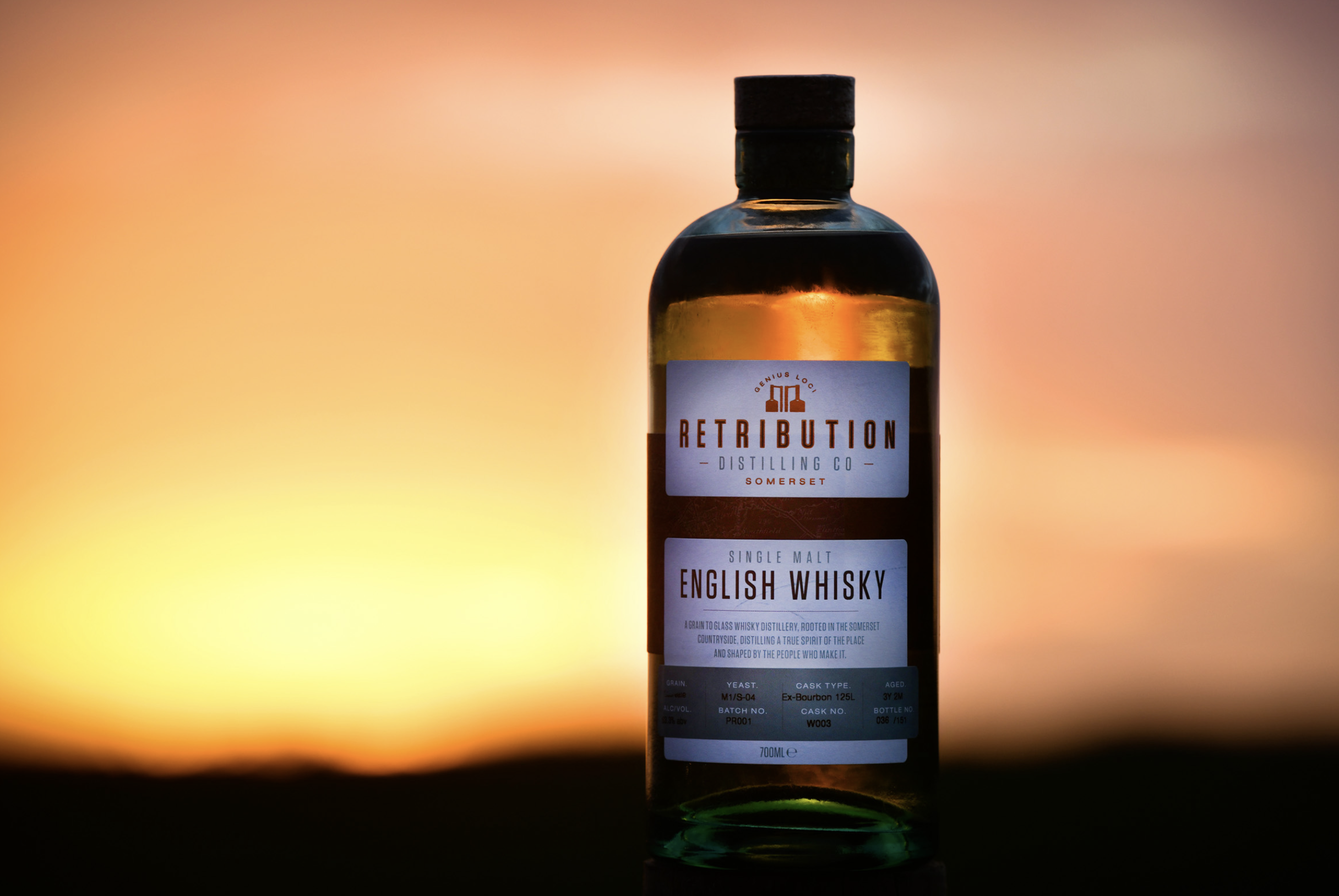
The whisky itself suggests all this effort is more than production theatre. His first public release was a 151-bottle bourbon quarter-cask bottling with plenty of toffee, caramel and butterscotch wrapped around the creamy texture Lock prizes, and has sold out. A later bourbon cask release, W008, that I tried brought citrus, malt and green apple, while the 370-bottle Oloroso-matured W006 pushes the spirit towards black cherry, dried fruit, sticky toffee, hazelnut and dark chocolate.
While some releases can be found on Master of Malt, most are sold directly through Retribution Distilling but many will sell out quickly. In mid September, Retribution will release 180 bottles from a chestnut cask, with further releases in October and November, as more of the experimental casks laid down five years ago a ready to bottle. The first whisky made with Somerset peat is due in March 2027 and applewood-smoked whisky will follow further down the road.
Lock’s desire to preserve that freedom also explains his discomfort with the proposed English whisky geographical indication. He has left the English Whisky Guild and believes parts of the proposed definition risk building the category around methods favoured by its larger producers, rather than leaving room for the sort of experimentation that helped English whisky develop in the first place.
For a tiny distiller, there is a practical side to that decision too. His Guild membership cost £500 a year. “I just made a decision that 500 quid was better spent on half a ton of grain,” he says.
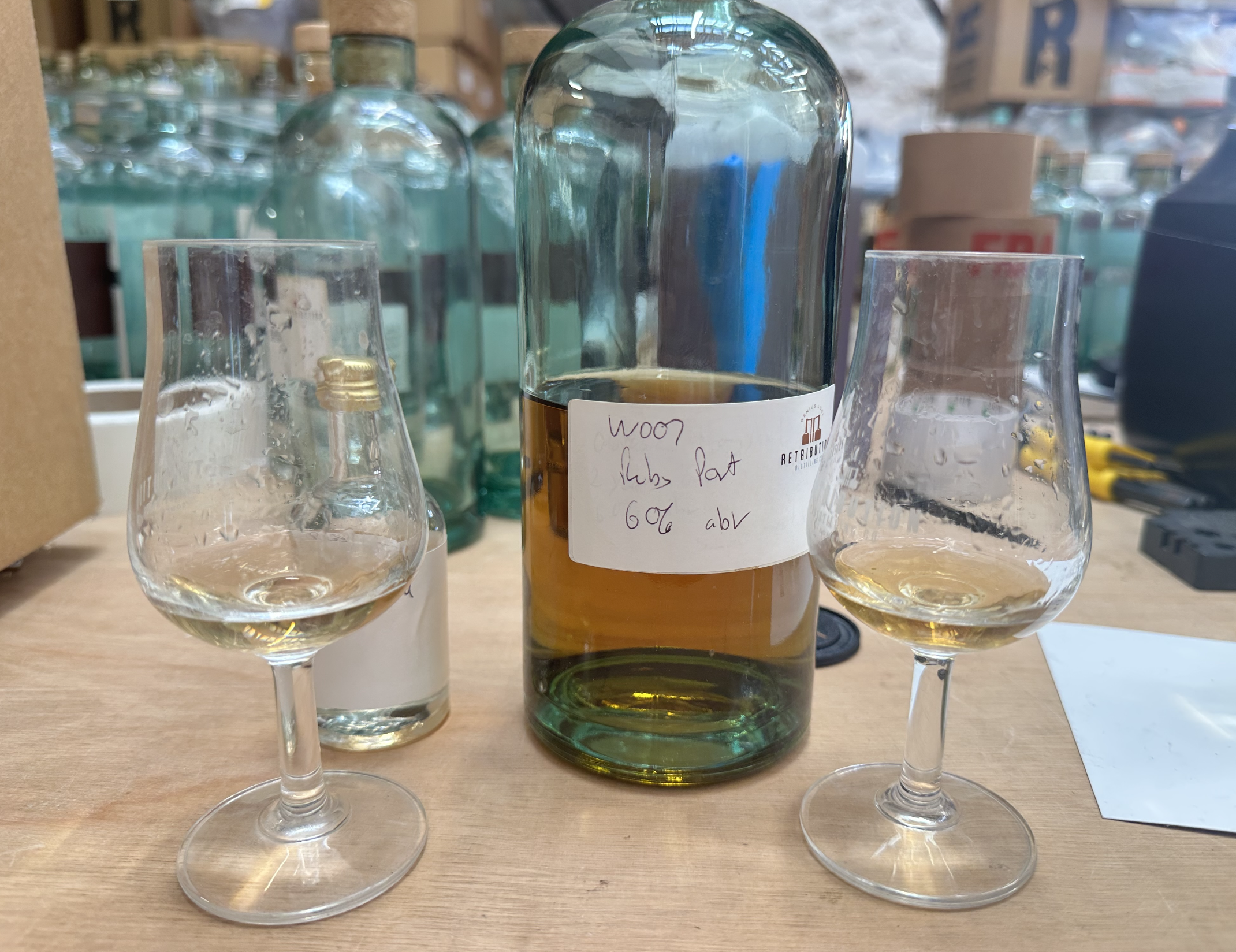
Tasting a new release
There is something revealing in that calculation. As bigger names and larger cheques arrive in English whisky, operations such as Retribution can look almost wilfully small. Lock talks about the “Rich Factor”, the recognition that with manually controlled direct-fired stills, homemade smoking equipment and so much of the process resting on his own judgement, he has effectively made himself another variable in the whisky.
“I, Richard Lock, make a difference,” he says. “I can’t have off days.”
For the past six years Retribution has been about finding out what happens when he changes something. The next stage is rather harder: deciding what worked, abandoning what did not and making a recognisable whisky again and again.
For a distillery conceived as payback for an earlier life, this new, narrower version of Retribution feels closer to what Lock intended all along.