The world comes to St James’s

Felix Dear, Berry Bros. & Rudd, spirits curator
Felix Dear arrived at Berry Bros. & Rudd with a love of old Scotch and a career spent discovering whisky from farther afield. Its new single cask collection suggests one of Britain’s oldest merchants is beginning to look at the wider world rather differently
Berry Bros. & Rudd has been trading in St James’s since 1698, so taking responsibility for its spirits collection means inheriting rather more history than the average drinks buyer.
Felix Dear became the company’s spirits curator in January 2024, taking over from Jonny McMillan, who left after seven years to establish Kythe Distillery in the Scottish Highlands. Dear arrived from Atom Brands, where he had been world whisky and spirits buyer and worked on the gloriously unruly That Boutique-y Whisky Company, following earlier spells at the Scotch Malt Whisky Society and the Highlander Inn in Craigellachie. Before all that, he had been a musician and DJ, which may partly explain why he seems comfortable changing the record occasionally.
When I spoke to him recently, his enthusiasm ran in two directions at once. He has a genuine love of Scotch, particularly older, spirit-led whisky and refill casks that allow the distillery character to come through without being smothered by wood. Yet he was just as animated talking about the innovative ways whisky is being made elsewhere, as producers work with local grain, unfamiliar climates, different woods and traditions that have not been handed down from Speyside.
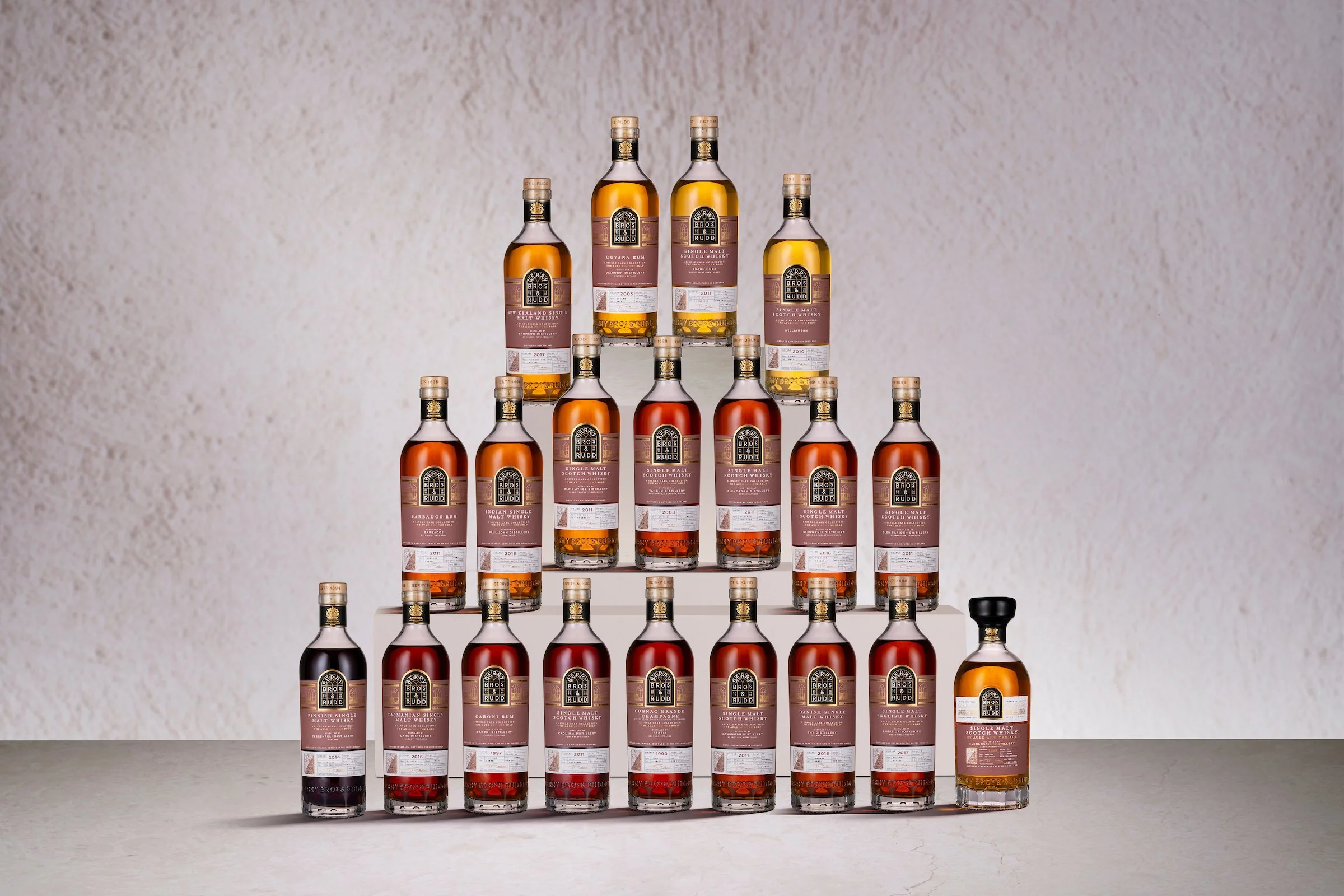
The Auld and the Bold features a true global spread of whiskies – with a range of colours to match
That combination helps explain The Auld and the Bold, the latest instalment in Berry Bros. & Rudd’s annual Odyssey collection. The release contains 20 single-cask whiskies and other spirits, bringing some superb and extremely old Scotch together with bottles from India, New Zealand, Australia, Denmark, Finland and England.
“For this year’s Odyssey collection, we wanted to explore the relationship between heritage and innovation,” Dear said. “Scotch whisky remains the benchmark that has inspired generations of distillers, but some of the most exciting spirits being made today are emerging from places far beyond Scotland.”
Any fear that Berry Bros. is abandoning its cellar keys and running off with the international new wave can be swiftly dismissed. There is a 1975 Glenlossie here, all candle wax, fruit, citrus and old-fashioned patience, with a £1,500 price that will probably encourage further patience from whoever buys it.
The Glencadam 2011 sounds fabulous and is far easier to imagine opening. Tinned peaches, mango, apricot, lemon zest, honey and soft toffee make it one of the most immediately appealing bottles in the collection, while the £80 price is refreshingly sane.
Tamdhu has also supplied one of the stronger releases on paper. Distilled in 2008 and bottled at 61.2%, the whisky has been shaped by a Moscatel cask, bringing dense red fruit, apricot conserve, ripe peach, coconut and candied ginger. Tamdhu and sherry wood are hardly strangers, but Moscatel gives this one a slightly more flamboyant wardrobe.
The more revealing bottles, however, have travelled considerably farther to reach St James’s.
Thomson Whisky in New Zealand has been doing excellent work with manuka smoke, producing something that does not taste like an Islay malt carrying a New Zealand passport. Its 2017 single cask brings aromatic wood smoke, clove, charred oak and smoked meat, lifted by lemongrass and honey. It is distinctive, a little unusual and entirely comfortable beside the established Scottish names.
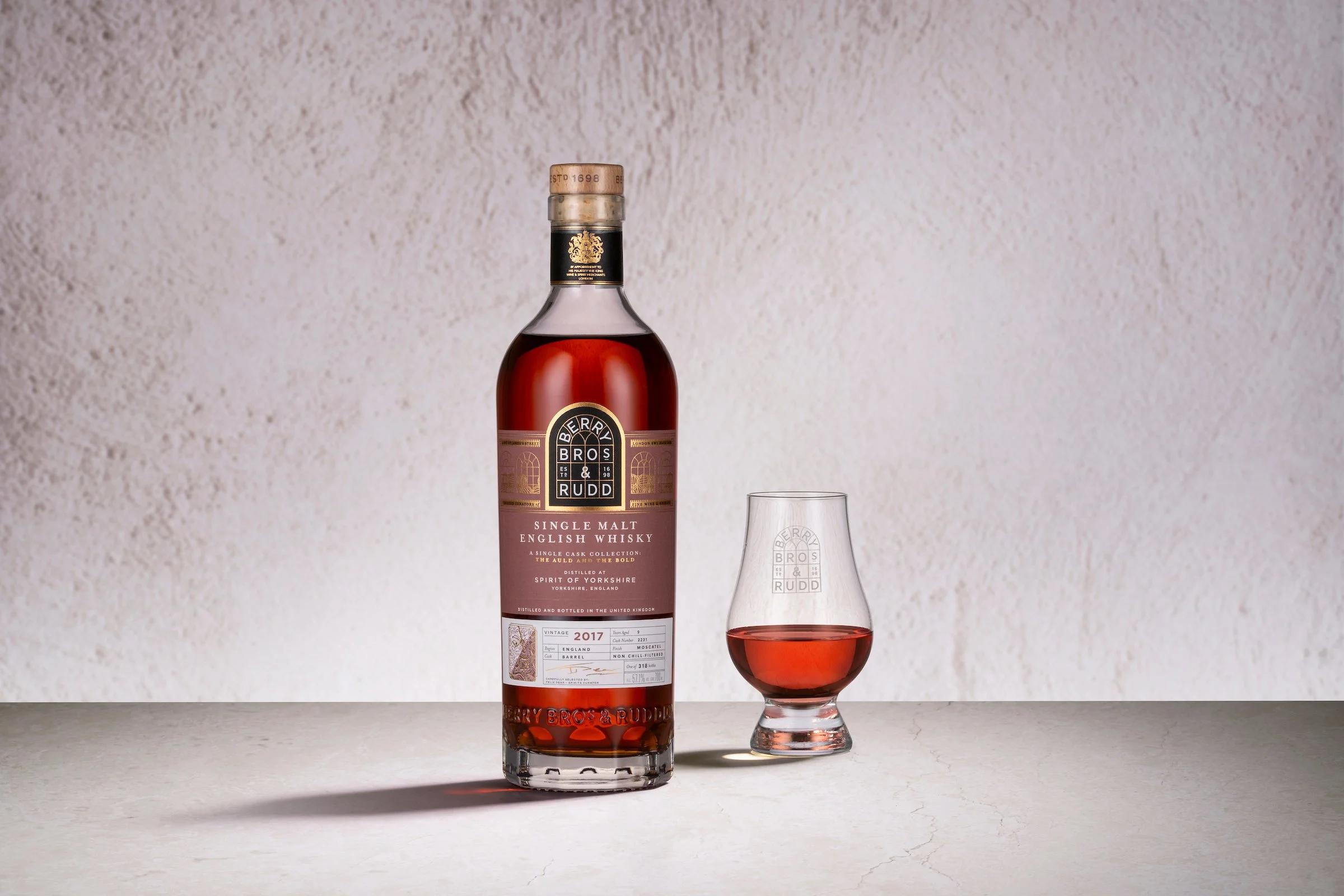
Jam, pineapple and peach are all on show in this 9-year old Spirit of Yorkshire single cask
The same can be said for Spirit of Yorkshire, whose 2017 single malt has matured for nine years near the North Sea at Filey Bay. Apricot, raspberry jam, orange oil, pineapple and peach are joined by honey, ginger and chocolate, showing how far English whisky has come since producers could attract attention simply by being English.
Spirit of Yorkshire no longer needs the novelty allowance. It is making good single malt and deserves to be judged accordingly, particularly when one of Britain’s most established merchants is prepared to put it beside Glenlossie, Tamdhu and Caol Ila rather than in a separate corner labelled “emerging regions”.
Paul John’s 2015 malt offers a rather different meeting between Scotland and the wider world. The Goan distillery combines Indian barley with Scottish peat, then matures the spirit in a tropical climate that moves whisky through its cask at a very different pace. The result promises thick smoke, sweet malt, honey, vanilla, baking spice, apple and flashes of tropical fruit. At £195, it is not priced as an adventurous punt, although Paul John is now far too established to be treated as one.
Denmark’s Thy uses barley grown on its own organic farm, with this 2016 whisky made from peated Odyssey barley before maturation in an ex-bourbon barrel and finishing in oloroso. Finland’s Teerenpeli goes darker and richer, with treacle, muscovado sugar, dates, Christmas pudding, cocoa and old oak.
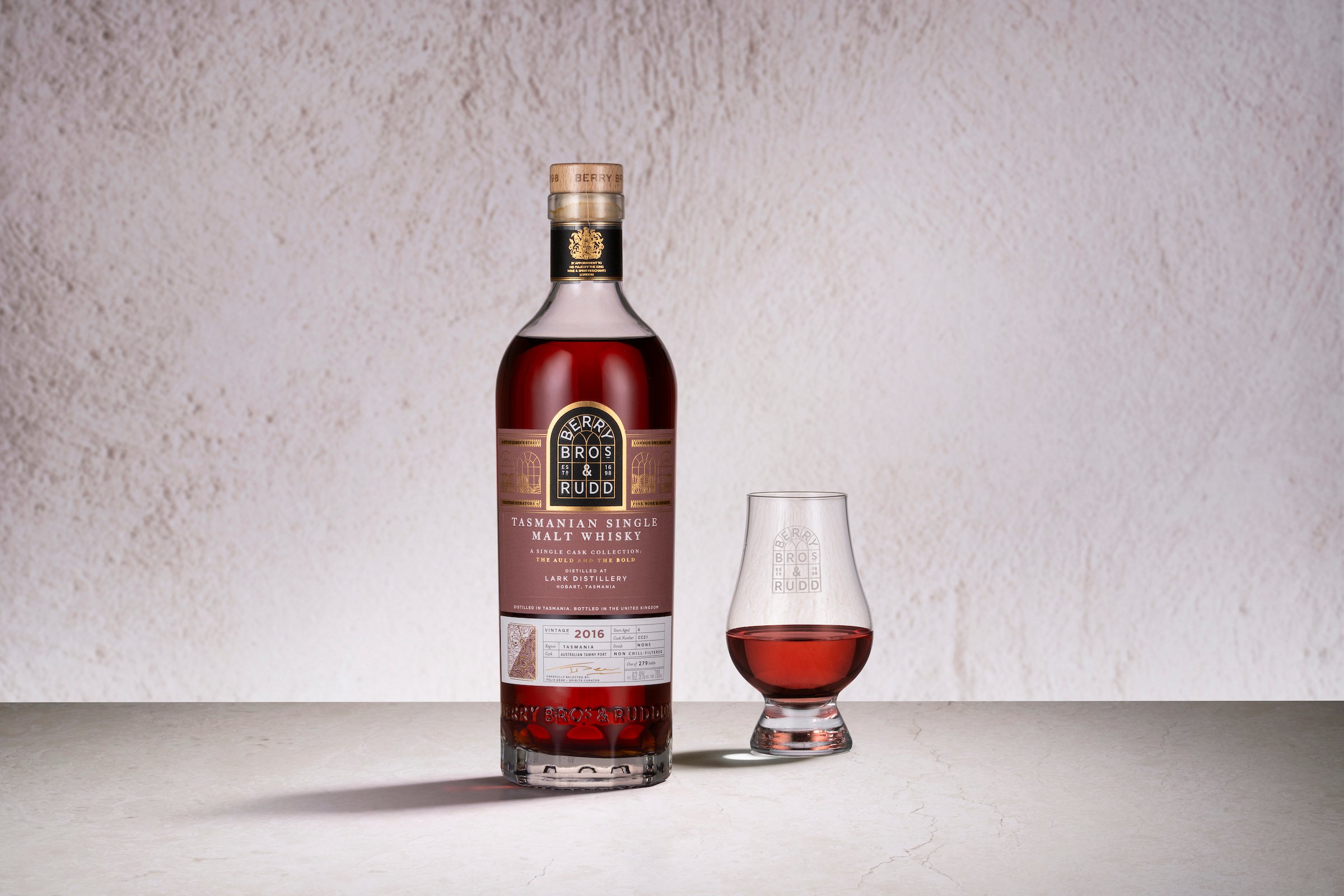
Lark Tasmanian Single Malt from a Tawny Port caks
Australia appears through Lark, where a 2016 whisky matured in a local Tawny cask produces the dried fruit, chocolate, orange peel and caramel richness that a drinker might initially assume had come from sherry. Different country, different fortified wine, equally large pudding.
What connects these whiskies is not that they have rejected Scotland. Most of the producers owe an obvious debt to Scottish methods, equipment and accumulated knowledge. The difference is that the better ones have stopped treating imitation as the final destination.
Dear describes the collection as bringing together “the timeless qualities that define great whisky and the fresh perspectives that continue to push the category forward”, whether the bottle comes from Speyside, Tasmania, Yorkshire or New Zealand.
That idea could easily become marketing fog, but the selection gives it some weight. These are not overseas whiskies invited along to make the guest list appear more international. They are single casks chosen by a curator whose career has moved between Craigellachie and world whisky, and who seems equally comfortable admiring a restrained old Glenlossie or wondering what manuka smoke can do to New Zealand malt.
Berry Bros. & Rudd is not turning its back on Scotch. Felix Dear clearly has no desire to do that, and neither would most of its customers. Yet its latest collection recognises that whisky’s centre of gravity is becoming harder to locate, and that some of the most enjoyable bottles now come from distillers who have taken Scotland’s template, carried it home and started scribbling in the margins.
The Auld and the Bold is out now through Berry Bros. & Rudd.